Emily Kittell-Queller
  • Home
  • About Me
  • Blog
  • Projects
  • Resume
  • Contact Me

Gendered Space in Greek Houses

30/10/2013

1 Comment

 
Ancient Greek houses were divided so that women were secluded from the world outside and from the rest of the house and from the outside.  There was the gynaikontis (women’s space) and the androkontis (men’s space) and ne’er the twain shall meet.  This is what the literature tells us.  Mostly.  The archaeological record shows that this may have worked differently than previously assumed.

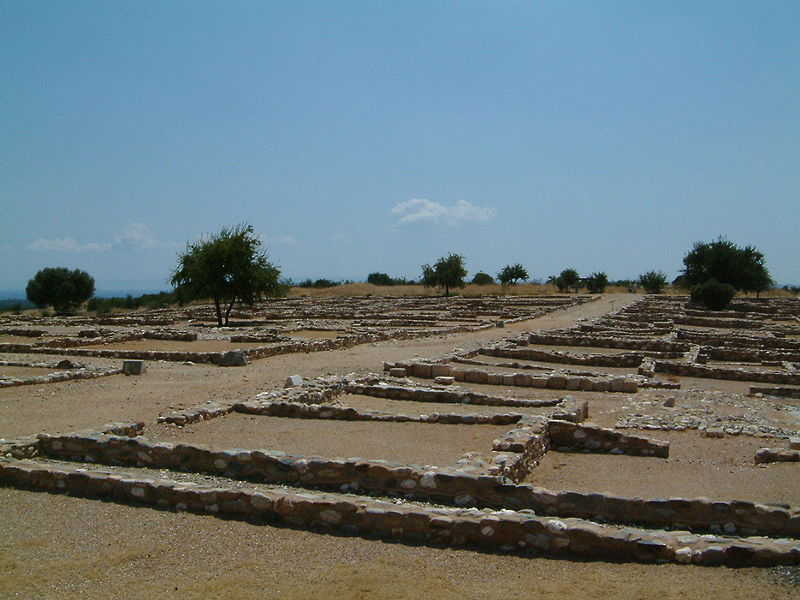
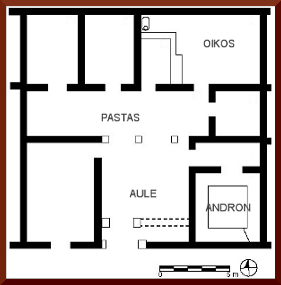
The houses of the rich may well have had a physical distinction between these spaces, but physically dividing one’s house that way was a little more difficult for anyone else.  Greek houses, as shown primarily by evidence from Olynthos and Athens,* tended to be organized around a courtyard and sometimes a colonnaded pastas.  Some houses had an upstairs.  Some did not.
Picture
Houses in Olynthos now.  Not a very inviting place to live.
[Ancient Olynthos Chalkidki, image by Christaras A]
[Source: Wikimedia Commons]

The only area that can definitively be designated male is the andrōn (the men’s dining room), which cannot be found in smaller houses.  The rest of the house is a bit more difficult to divide on a physical level.  If we hold to a strict division and the courtyard is designated women’s space, men can’t get anywhere in the house.  The same goes in reverse.  Additionally, one of the primary tasks women did, weaving, would have been impossible without good lighting.  It simply would not have been practical to do draw a line and say “you can’t step across this.”  Not only would nobody be able to move around the house, but some things did happen in common, sleeping and eating, for example.
Picture
This house is very typical.  Most houses aren't quite so neatly laid out.
[Ground Plan, Source: Traveling to Nikiti]
The only option, as some scholars argue, is to consider this a conceptual division of space rather than a physical one.  It was partially a division was one of time, where different people stayed out of the more central parts of the house during different parts of the day.  It could also have been a division of behaviour, with people pretending others simply weren’t there.

*[Skip this if you’re not interested in sources]  Olynthos is problematic in that it is not very close to Athens and provides evidence from a little later than the height of what most people call Classical Greece.  However, it is also one of the best we have.  The city was sacked and most of it was never reoccupied.  The site gives us not only exact layouts for individual houses, but also evidence for what sorts of items might have been used in various rooms.  The problem with studying Athenian houses is mostly a question of access.  There is a lack of funding and most ancient houses are buried under buildings whose owners really don’t want you digging at their foundations thank-you-kindly.  Then there’s the archaeologist who got into a spat with the Greek state and refused to release his findings.  So yeah, evidence is kind of a big problem.

Sources:

Antonaccio, Carla M. "Architecture and Behavior: Building Gender into Greek Houses." The Classical World 93.5 (2000): 517-533.

Nevett, L. C. "Gender Relations in the Classical Greek Household: The Archaeological Evidence." The Annual of the British School at Athens 90 (1995): 363-381.
1 Comment

St. Matrona of Perge (5th Century)

28/10/2013

0 Comments

 
Picture
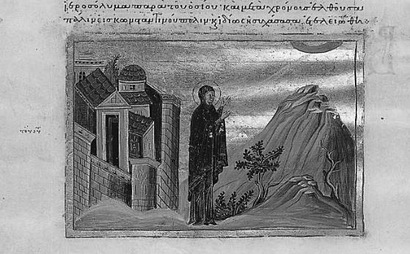
It's nearly impossible to find images of this St. Matrona
[Matrona of Perge in the Menologion of Basil II, Source: Wikimedia Commons]
There is a tradition in 4th to 7th century Christianity of saintly women disguising themselves as men and becoming monks.*  Most of the ones we have evidence for were Byzantine.  Most who are now venerated as saints remained in disguise until their deaths.  Matrona not only continued to dress as a monk while society saw her as female, but she even founded a monastic community of women who all wore the monk's habit, not the nun's.

According to her vita, Matrona of Perge was born to a somewhat wealthy family in Perge in the region of Pamphylia (in what was then the Eastern Roman or Byzantine Empire and is now southern Turkey).  Her husband, a man the vita later implies to have been somewhat abusive, disapproved of her devotion to God.  She fled him, disguising herself as a eunuch and joining a male monastery in Constantinoples under the name Babylas.  Eventually her secret was revealed to her superior, Bassanios, in a dream.  When her husband came seeking her, Bassanios sent her to Emesa.  From there she went first to Jerusalem, then to Beirut.  When she returned to Constaninople several years later, she brought her companions from Beirut to found her own monastic community of women.

Here’s where we get to the interesting bit.  On her return to Constantinople, she did not wear a nun’s habit.  She continued to dress as a monk.  So did the rest of her community, with the full knowledge and support of her superior in the Church hierarchy.  This was no woman living as a monk without the knowledge of the community in which she lived.  This was an entire community of monastic women who looked like monastic men.

Nor did she remain quietly in her monastery.  A summary Theodore Lector’s Ecclesiastical History (the original has unfortunately been lost) tells us that she publically opposed Emperor Anastasios I’s monophysite policies.  After her death sometime around 510-515, she was venerated as a saint.  Her cult and her community persisted at least until the 12th century, after which historical record is silent.


*They are now sometimes known as “transvestite nuns.”  My issues with that term, let me not talk about them right now.  If I do, I’ll go on for another page or more.  Also, pronouning historical figures.
Further Reading:

Vita Prima, translated by Jeffrey Featherstone and with an introduction by Cyril Mango

Vita Altera, translated by Khalifa Ben Nasser

Sources:

Featherstone, Jeffrey, trans. “Life of St. Matrona of Perge.” In Holy Women of Byzantium: Ten Saints’ Lives in English Translation, edited by Alice-Mary Talbot, 18-64.

Mango, Cyril. “Introduction to the Life of St. Matrona of Perge.” In Holy Women of Byzantium: Ten Saints’ Lives in English Translation, edited by Alice-Mary Talbot, 13-17.
0 Comments

Roman Concubinage - Legal Status

25/10/2013

1 Comment

 
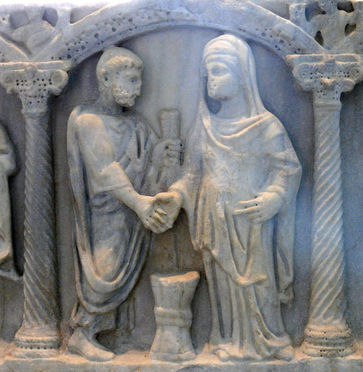
The simplest definition of concubinage is “an ongoing (usually matrimonially oriented) relationship between two people who cannot be married.”  The word is related to the Latin term for “to lie down with.”  In Rome during the early Empire, concubinage was a relationship entered into instead of marriage rather than in addition to it, and the usual factor preventing marriage was status.  This would have been social and economic, not slave status.  In all examples we have evidence for, the higher status partner was male.
Picture
Socially important, legally not necessary
[Roman Marriage Vows depicted on the Sarcophagus of the Dioscures, late 4th century]
[Photographed by Ad Meskens, Source: Wikimedia Commons]

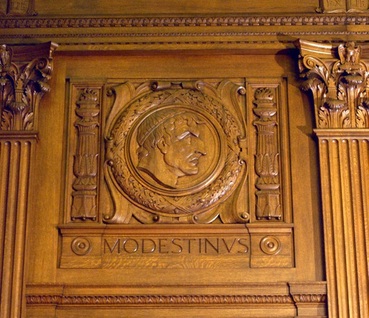
The problem here was defining who was a concubina and who was a wife.  As I mentioned in an earlier post, jurists in Imperial Rome were very interested in the concept of affectio maritalis and what constituted marriage in male-female relationships.  A wife had some claim on one’s property and produced legitimate heirs, a concubine (female or male) did not.  The late second century jurist Julius Paulus argued that “a woman must be considered to be a concubine on the basis of intention alone” (Responsa, book 19).  His colleague Modestinus, writing around 50 years later disagreed.  “Cohabitation with a free woman is to be considered marriage not concubinage, unless she is a prostitute” (Rules, book 1).
Picture
He has a nose even I'll remember.
[Image of Modestinus in the main reading room of the Supreme Court Library]
[Source: The Oyez Project]

Since only cohabitation and intent were technically required for a marriage between two Roman citizens to be considered valid,* one can imagine this caused a lot of confusion and a lot of concern.  The status of the partnership defined the social position of its participants, but only the children of a wife could inherit.  Regardless of parentage, the children of both wife and concubine had to be maintained by their father.  Romans placed a lot of importance on status, and the similarities between the positions of wife and concubine blurred those distinctions.

*A dowry was also generally required for a wife but not for a concubine.  This, however, seems not to have necessarily been a legal requirement but a social one as far as I can tell.

Further Reading:
Women of History: Concubines

Sources:

Lefkowitz, Mary R. and Maureen B. Fant, trans. Women’s Life in Greece and Rome: a Source Book in Translation. Baltimore, MD: Johns Hopkins University Press, 1992.

Rawson, Beryl. “Roman Concubinage and other De Facto Marriages.” Transactions of the American Philological Association 104 (1974): 279-305.

Treggari, Susan. “Concubinae.” Papers of the British School at Rome 49 (1981): 59-81.
1 Comment

The Problem of Feudalism

23/10/2013

0 Comments

 
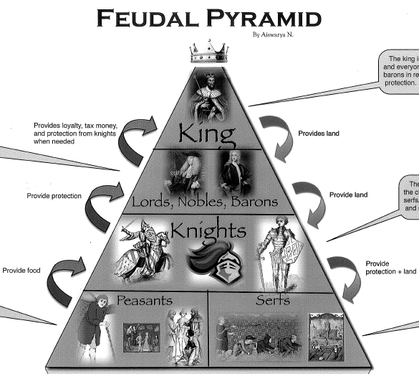
Alright, let’s talk about feudalism.  It was a hierarchical way of organizing society from serfs to kings such that people on each level were bound to the service of someone on the level above.  Like this:
Picture
You can ignore the text bubbles.
[Feudal Pyramid, Source: Ol' King Cole's Castle]
Well, no.  That is the definition a lot of people use, though they often include a powerful Church somewhere in there.  Everyone was bound to people above and below them.  Simple and incredibly vague.

Then there’s the more specific but still seemingly simple “fief-holding.”  Lord A holds a chunk of land “in fief” to Lord B.  Though Lord B is the one who actually owns the land, Lord A is the one who sees to its administration and collects the revenue it produces.  In return, Lord A swears fealty and service (often military) to Lord B, who generally higher in rank.  Also fairly tidy, but less vague.  And a gross oversimplification if it’s left at that.

Now we come to Karl Marx, who considered purpose of the whole system to be of the exploitation of the peasants.  He also seemed to think it worked exactly the same way (see above plus exploitation) from the 5th century to the French Revolution.  That’s more than 1300 years, people.  Unchanged and the same all over Europe for that long.  Really?

Lastly there are the throwaway uses for the word “feudalism” and the related word “feudal.”  They become synonyms for “decentralization,” “noble,” or even “medieval.”  At this point is there even any meaning left in the word?

Stop.  Just stop.  Please.  Don’t use “feudalism” or “feudal” unless you and your audience know exactly what you’re talking about.  Most medieval historians have already thrown those words out as useless.  Find a different word.  Try “fief-holding” or “noble” or “medieval.”  Say what you mean without making reference to an already confused concept with horribly negative connotations.

Sources/Further Reading:

Bouchard, Constance Brittain.  Strong of Body, Brave & Noble: Chivalry & Society in Medieval France. Ithaca, NY: Cornell University Press, 1998.

Barendse, R. J. "The Feudal Mutation: Military and Economic Transformations of the Ethnosphere in the Tenth to Fourteenth Centuries." Journal of World History 14.4 (2003): 503-529.

Morillo, Stephen. "A 'Feudal Mutation'? Conceptual Tools and Historical Patterns in World History." Journal of World History 14.4 (2003): 531-550.
0 Comments

Carolingian Minuscule

21/10/2013

0 Comments

 
Picture
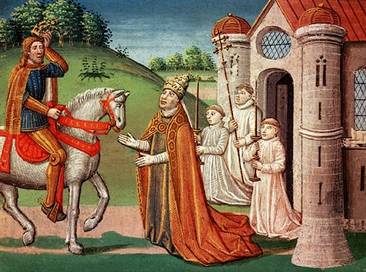
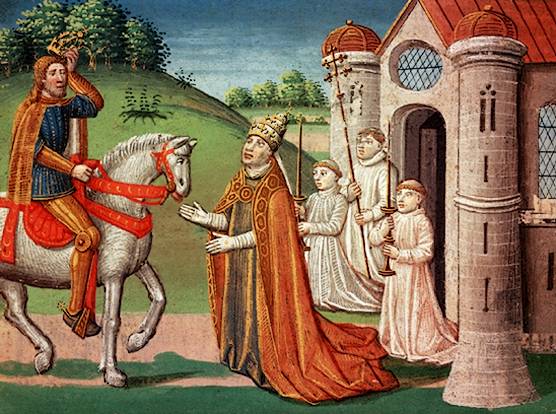
The guy on the left who's doffing his... crown?  At the Pope?
[Charlemagne and Pope Adrian I]
[Painted By Antoine Vérard c. 1493, Source: Wikimedia Commons]
I know I’ve mentioned Charlemagne before.  Holy Roman Emperor, crowned Christmas 800, unified much of northern Europe under his rule.  So yeah, he was a pretty important guy.  Did you know he was also partially responsible for a reinvention of lowercase letters in what we now call the Roman alphabet?

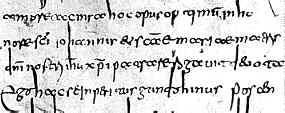
See, he found as he added to his empire that clear communication was key to maintaining his control.  The thing was, since the fragmentation of the Roman Empire 400 years prior and the migration of new groups of people with new languages into Europe, people on one side of his territories probably didn’t speak the quite the same versions of Latin and they certainly didn’t all write things the same way.  Some of the manuscripts produced were really hard to read simply because it was difficult to make out the letters.
Picture
I can make out "ego hoc" and that's about it.
[Merovingian script from an 8th century Evangelary, Source: Wikimedia Commons]
So Charlemagne decided to replace the previous script with a clearer one.  He did not do the work himself, being only semi-literate and already very busy carving out and running an empire.  Instead he gave the task to Alcuin of York and those who worked under him at the scriptorium at Aachen.  The script he produced is now known as Carolingian minuscule.
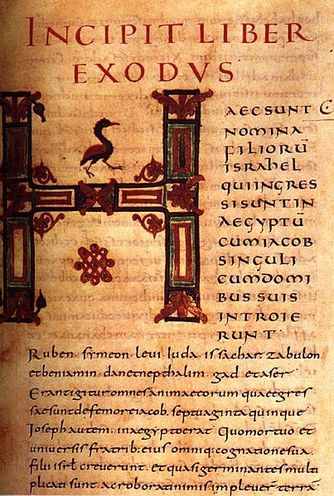
Picture
Much easier to read.
[First page of the Book of Exodus, Source: Wikimedia Commons]

The top half of that image contains a majuscule, or uppercase, script.  The lower half is all Carolingian minuscule.  It was easier to write quickly than a majuscule and easier to read than the Merovingian script.

The script spread across Europe and was popular for a long time before being superseded by Gothic scripts.  It was revived by the humanists in the Renaissance (they mistook it for a Classical Roman script rather than a medieval one) and spread from their works into typeface with the invention of the printing press.  The modern font Times New Roman is partially based on this script.
Links of Interest:
Caroline Minuscule
Carolingian Minuscule Predates Charlemagne
0 Comments

Benvenuto Cellini (1500-1571)

18/10/2013

0 Comments

 
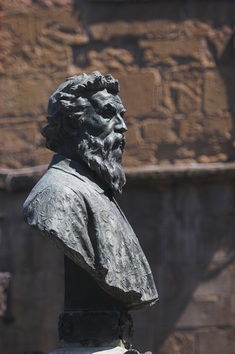
Picture
Benvenuto Cellini, goldsmith, sculptor, soldier, musician, and arrogant rogue
[Bust of Benvenuto Cellini, sculpted by Raffaello Romanelli, 1901]
[Photographed by Thermos, Source: Wikimedia Commons]

In many ways this guy was a true renaissance man.  Though he was primarily a goldsmith, throughout his life he also worked as a sculptor, draftsman, musician, and writer.  He received steady work throughout his life from two popes, several dukes and cardinals, and the King of France.  He designed created works that others supposedly said were impossible.  He traveled widely throughout Italy and France when need or desire called him.  When Charles III, Duke of Bourbon attacked Rome, Cellini fought bravely in defense of the city and the Pope.  He was allegedly responsible for killing of both the Duke of Bourbon and the Prince of Orange, one of the duke’s major supporters, in the fighting.  He did not have good control over his temper.  On several occasions he attacked and killed people for supposedly justified reasons.
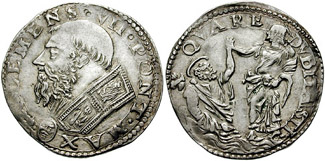
Picture
Being appointed to the Papal Mint really only inflated his ego
[Coins designed for Clement VII, Benvenuto Cellini, 1523-1534]
[Photographed by Classical Numismatic Group, Inc., Source: Wikimedia Commons]

I say “allegedly” and “supposedly” because the major source we have for a lot of this information is his own autobiography.  The thing is, this was the first surviving secular autobiography since the Roman Empire.  In other words, he had to be really arrogant to think writing this thing was a good idea.  It comes through in his work too.  The back cover of George Bull’s translation calls it “his own heroic opinion of himself.”  That’s one way of putting it.  I would argue that “he was lying through his teeth” also works.  For all of that though, it’s certainly an entertaining read.  In his mind, whatever he did was justified and nothing was ever his fault.  Anyone who wronged him was simply jealous of his great skill, which admittedly lived up to his own opinion of it.
Picture
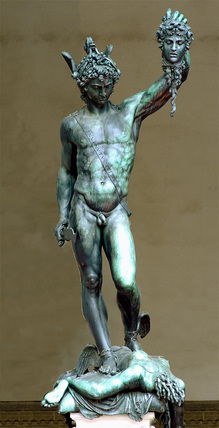
Isn't the point not to turn one's audience to stone?
[Perseus with the head of Medusa, sculpted by Benvenuto Cellini, 1545-1554]
[Photographed by Dodo, Source: Wikimedia Commons]

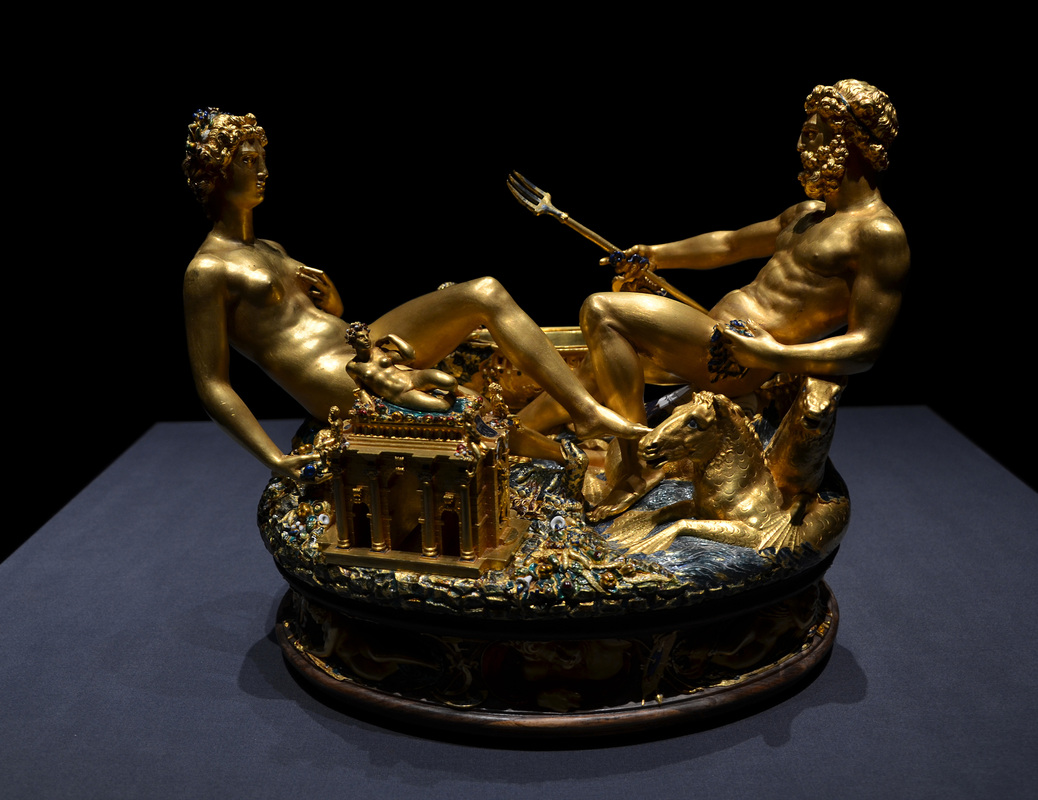
He is best known for his “Perseus with the head of Medusa,” his “Saliera” (saltcellar), and his autobiography.  All three command awe, but only two of them do so for their artistry.
Picture
I've always wondered, where does the salt actually go?
[Saliera, Benvenuto Cellini, 1543]
[Photographed by Vassil, Source: Wikimedia Commons]

0 Comments

Bathing

14/10/2013

0 Comments

 
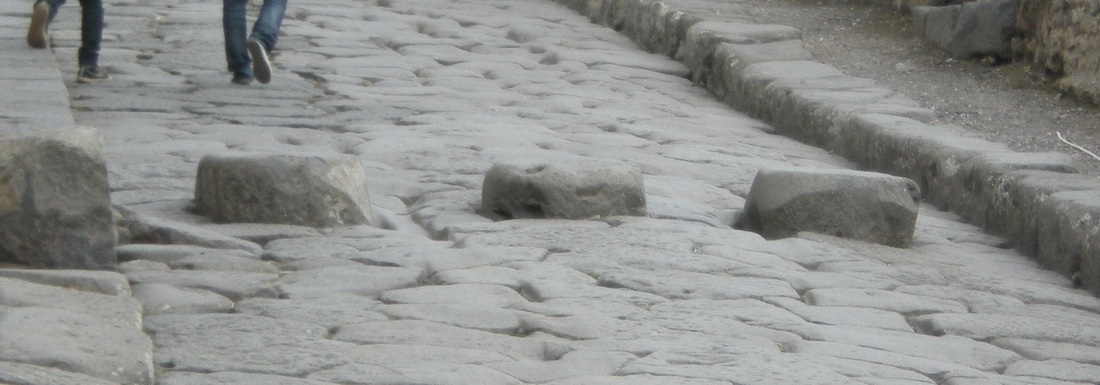
You think medieval cities and you think stinky, right?  I know I do.  People are dumping their waste out into the street, nobody’s cleaning up after the horses.  The same goes for Roman cities really.  I mean, why else would Pompeii have needed crosswalks like this:
Picture
Yup, Pompeii had crosswalks
[Crosswalk, photographed by me]
I mean, come on.  The gunk’s gone now, but can you imagine?  Ew.  But this was the Roman Empire and Romans were rather obsessive about bathing.  You just need to go look at the ruins of their bathhouses to see that.

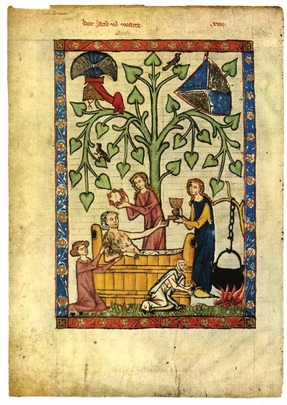
Now here’s a question: why should Europeans stop caring so much about?  Answer: they didn’t.  Why should they?  They still had the facilities for it in the cities.  Nobody really liked being stinky.  (Would you?)  Most importantly, no one was telling them bathing was bad.  All of that stuff that says bathing is harmful to your health?  It comes from the 14th century when, you know, there was a plague going around.
Picture
Even if his bathwater is heated I really hope it's warm out.
[Source: Manesse Codex, plate 20]
The only reference the Rule of St. Benedict makes to bathing is when it talks about the care of the sick.  “The sick may take baths whenever it is advisable, but the healthy, and especially the young, should receive permission less readily.”  There’s an idea here that bathing is probably good for sick people.  It’s also worth pointing out that most monasteries had a fountain right outside the Refectory (where they ate) for washing their hands before and after a meal.

On the secular side of things, medieval health manuals also make reference to bathing as something good for the body.  The Regimen Sanitatis Salernitanum, written sometime between the 11th and 13th centuries, says “In the morning, upon rising, wash your hands and face with cold water.”  It also says that Spring is a good time for bathing, in moderation.  Nor was this the only health manual to say things like this.  Medieval cities may have been really dirty, but so were Roman ones.  The people in both time periods liked to be clean.

Further Reading:
A Short History of Bathing Before 1601
Did people in the Middle Ages take baths?
Sources:
The Rule of St. Benedict, translated by Timothy Fry
Regimen Sanitatis Salernitanum, text can be found here
0 Comments

Atlas

12/10/2013

0 Comments

 
Picture
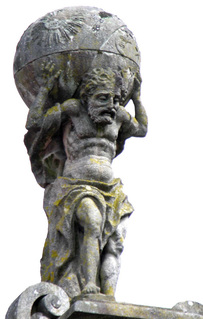
You may remember this guy from the Labors of Hercules
[Statue of Atlas at Santiago de Compostela]
[Photographed by Luis Miguel Bugallo Sánchez, Source: Wikimedia Commons]
According to most sources, Atlas was the child of Iapetus, a Titan, and either Asia or Klymene, both Oceanids (daughters of Oceanus).  This makes Gaia (Earth) and Ouranos (Sky) his grandparents through his father and his great-grandparents through his mother’s mother.  You’ll see why that’s relevant in a moment.  He is best known for the time Herakles tricked him into helping him retrieve the apples of the Hesperides.

Atlas fought against the Olympians with the other Titans and was defeated along with the rest of them.  Unlike the rest of them, he was not confined to Tartarus afterwards.  Instead, Zeus had him stand at the western edge of Gaia to hold Uranos on his shoulders and keep them apart.  In other words, he is perpetually stuck between his grandparents.
Picture
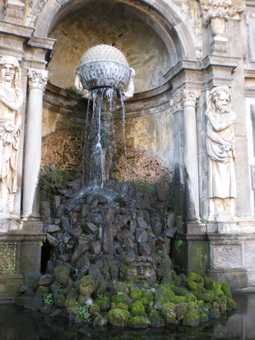
He's lucky he can't feel the temperature.  It was cold that day.
[Atlas, Centerpiece of the Water Theater at Villa Aldobrandini in Frascati]
[Photographed by me]
Most sculptures of him show him holding a sphere on his shoulders and some of them, like the one above, are used in fountains.  A lot of people think the sphere represents the earth, which it actually doesn’t.  If you look back to the myth, he stands on the earth, holding the sky on his shoulders.  It means the whole fountain idea makes a lot of sense, what with the water falling from the sky as rain.

I’m no art historian, but I’d guess that in that picture there the water falling out of the sphere, over Atlas, and onto the ground represents rain falling from the sky.  This particular statue, by the way, comes from the Villa Aldobrandini, built in the mid 1500s.  Rich people building gardens during what we call the Italian Renaissance liked to include references to Herakles and his encounter with Atlas because it allowed them to compare their own property to the Garden of the Hesperides.

Unsurprisingly, that reference is less common nowadays.  And no, those books full of maps are not named after him.  The Atlantic Ocean is, though.  And so is this:
Picture
I see what you did there.
[Atlas Van Lines, Source: 1stPix]
0 Comments

The Early Middle Ages

9/10/2013

0 Comments

 
The Early Middle Ages, called “the Dark Ages” by some, is the period of time between Late Antiquity and the High Middle Ages.  What that means in terms of dates is rather hard to pin down, but many put it between the fifth and tenth centuries (400’s – 900’s or thereabouts).

The early part of this period was characterized by the fragmentation of political power, a decrease in population, and the decline of cities in what had been the western half of the Empire.  (Note: The eastern half would continue to exist until 1453.)  As the government fell apart, public institutions and communication across what had been the Empire followed.  Power, land, and learning all became privatized. The Church tried to maintain some of the political structure, but was generally too weak to fill the void left by the Empire.  Powerful men set themselves as local lords answerable to no central power and consequently spent a certain amount of time fighting over land.  Lack of communication and the need to focus on survival meant that education and learning were primarily restricted to monasteries.

Things did not stay this fragmented though.  Barons and kings began collecting more land and other lords under their power.  The biggest example here is Charlemagne.
Picture
Just wait 'til you see how tall he was
[Charlemagne and Pope Adrian I]
[Painted By Antoine Vérard c. 1493, Source: Wikimedia Commons]
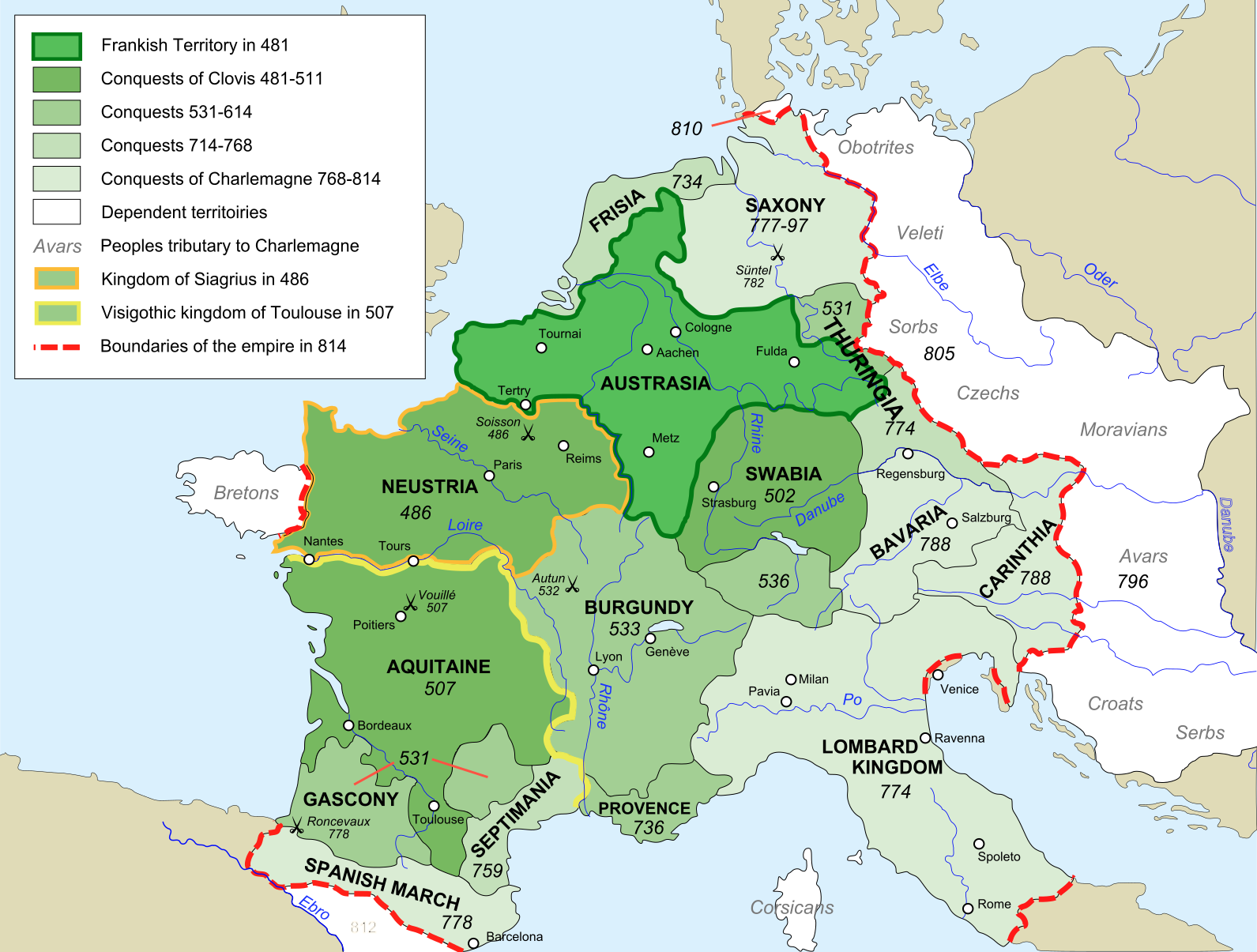
His father, Pepin the Short, was elected (yes, elected) Mayor of the Palace and then later King of the Franks.  His son Charles, who eventually became known as Charlemagne, became even more powerful.  The Pope crowned him Holy Roman Emperor at Christmas in the year 800.  By the time he died he controlled most of what we might now call Central Europe.  Wikipedia has a good map:
Picture
More united than Europe has been in 1200 years
[Frankish Empire 481 to 814]
[Sémhur, Source: Wikimedia Commons]
As you might expect, things didn’t stay that way and his empire broke apart after his death.  One could use this to say that the Early Middle Ages were characterized by the fragmentation of power.  I would argue differently.  This was a time period of rebuilding and of putting Europe together in new ways.
0 Comments

Affectio Maritalis: Legal Marriage in Ancient Rome

7/10/2013

5 Comments

 
In the Roman Empire, the two of the main purposes of marriage were the production of legitimate children who were Roman citizens and the regulation of women’s relationships and property.  Augustus was so worried about birthrates that he instituted penalties for citizens who did not marry by a certain age, excluding prostitutes of any class.  He also provided rewards for citizen women who produced a certain number of legitimate children.  Despite all of this, the actual legal requirements for marriage were very simple and can be summed up in two terms: citizenship and affectio maritalis.

The first part of this, citizenship is fairly simple:  for the purposes of marriage, both parties had to be Roman citizens.  Affectio maritalis is harder to pin down.  It means both “marital affection” and “the intent to be married.”  Generally, certain rituals of marriage would be performed, but they weren’t legally necessary.  The partners only had to both be citizens and intend to be married.

This isn’t to say that all matches between two Roman citizens were called “marriage.”  Sometimes there was simply too much of difference in status between two citizens to allow for a marriage.  People did not always agree what constituted too much of a difference, but concern generally centered around situations where the male partner was of patrician status and the female was either a prostitute or a former slave.*  These kinds of relationships had their own status and went by their own name: concubinage.

It’s important to remember that we’re talking about legal definitions here, not actual social practise.  Although marriage in ancient Rome was of legal concern, people didn’t need a legal ceremony to get married.  They only had to be legally permitted to marry and to consider themselves married.  Imagine the drama if that were the case now.

* The idea that a woman might have a permanent, legal relationship with a man of lower status was unthinkable, and therefore also very complicated legally.

Further Reading
  • Lefkowitz, Mary R. and Maureen B. Fant. Women’s Life in Greece and Rome: a Source Book in Translation, 1992.
  • Rawson, Beryl. “Roman Concubinage and other De Facto Marriages.” Transactions of the American Philological Association 104 (1974).
  • Treggari, Susan. “Concubinae.” Papers of the British School at Rome 49 (1981).
5 Comments
<<Previous

    My Blog

    Translation of the above: where I post the interesting things I find researching the Classical and Medieval periods in my free time.

    Currently Reading:
    -
    Medieval Monasticism by C. H. Lawrence

    Archives

    March 2016
    February 2016
    January 2016
    December 2015
    November 2015
    October 2015
    September 2015
    August 2015
    July 2015
    June 2015
    May 2015
    April 2015
    March 2015
    February 2015
    January 2015
    December 2014
    November 2014
    October 2014
    September 2014
    August 2014
    July 2014
    June 2014
    May 2014
    April 2014
    March 2014
    February 2014
    January 2014
    December 2013
    November 2013
    October 2013
    September 2013

    Categories

    All
    Architecture
    Biography
    Classical
    Law
    Marriage (legal And Otherwise)
    Medicine
    Medieval
    Misconceptions
    Monasticism
    Overview
    References
    Religion
    Review

    RSS Feed

Powered by Create your own unique website with customizable templates.