Emily Kittell-Queller
  • Home
  • About Me
  • Blog
  • Projects
  • Resume
  • Contact Me

Women and Property at Gortyn

31/10/2014

0 Comments

 
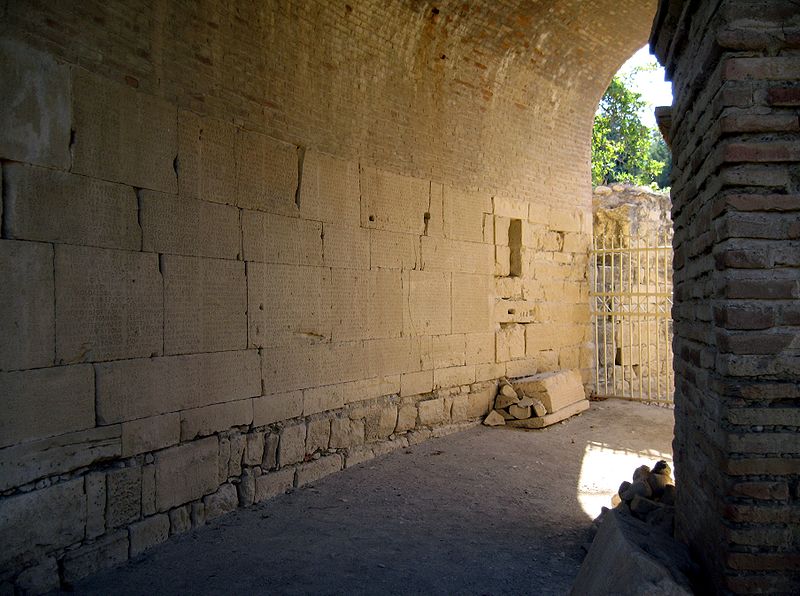
Women at Gortyn in the Classical period, like Spartan women, owned property in their own right at least up until the Roman period, probable well into it.  Much of what we know about how this worked comes from the city’s Law Code, which laid out not only inheritance rights, but also what property a woman got in divorce and who had the right to manage what possessions.  As at Sparta, women at Gortyn had no need of a kyrios (guardian).
Picture
The Gortyn Code, written in stone.
[Gortyn Law Code, 6th & 5th centuries BCE, photographed by Olaf Tausch]
[Source: Wikimedia Commons]

The primary way a woman acquired property was through inheritance.  On a father’s death, the city house and the contents of any country houses not belonging to his slaves went to his sons.  The rest of the property was divided up between all of the children, with daughters getting half of a son’s share.  Unlike a son, however, a daughter did not necessarily have to wait until her father’s death to receive her share.  If her family wished it, she could take possession of her inheritance on her marriage or sometime thereafter.  It is for this reason that this has sometimes been called a dowry, but it is worth noting that the property could come to her anytime between her marriage and the time shortly after her father’s death.  Children also inherited from their mothers, presumably along the same lines.

A man at Gortyn controlled his own property and that of his children, but not his wife’s.  If he mismanaged it, control of his children’s shares passed their mother.  Since men were supposed to concentrate primarily on their military duties, however, it is likely that women managed most of the property themselves anyways, at least once they were of an age to move out of their parents’ homes.  In the event of widowhood or a divorce, the wife could take away her own property, half of what it produced, and half of what she had woven in the household.  There is some evidence that slaves could own property as well, though perhaps it would be more accurate to say they held it.  Upon separation from her husband, a female slave took “what she has” back to her former master. 
It was in her possession and remained so, but never truly belonged to her.

Sources/Further Reading:
The Law Code of Gortyn (Crete), c. 450 BCE - Internet History Sourcebooks Project
Laws Relating to Women in Gortyn, Crete - Diotima
Aristotle, Politics 2.1272a - Persueus
Pomeroy, Sarah. Goddesses, Whores, Wives, and Slaves: Women in Classical Antiquity. New York: Pantheon Books, 1995.
0 Comments

De Facto Marriages Among the Lower Classes

29/10/2014

1 Comment

 
What I speak of here cannot be so strictly defined as Roman concubinage was.  We are talking about a wide variety of different people in different places who may or may not even have heard of the concept of concubinage, as the lawyers continued to call it.  In practice perhaps it would be better to borrow Rawson’s term “de facto marriage.”  In these situations, people may not have considered the relationship a marriage or could not technically be married (due to priestly status or a prior marriage), but lived as though they were.  In other cases only a theologian or lawyer would call the relationship concubinage rather than marriage.

While local custom varied, one really only had to seize on the theory that marriage was made by consent alone, which it has been shown was widely known, if not always accepted.  If a couple simply moved in together, which certainly happened, there would be no certainty as to whether they were married.  If one partner wanted out, all they had to claim was that they had not exchanged present consent** and that they, in fact, did not consent to be married to this person in the present, making the relationship one of concubinage instead.  The court would then be stuck with a clandestine marriage case with little proof on either side and was just as likely to separate them as declare them married.  Or, if they both consented, all they really had to do was separate.

Then there are the cases where everyone knew the people living together were not technically married.  The most prevalent example of this would be priests’ wives and concubines.  For all intents and purposes, these local priests, their partners, and most or all of their parishioners considered them married.  
In the 12th century and afterwards, however, the “wife” was legally and theologically a concubine.  In the later Middle Ages, as the law began to crack down on concubinage, more and more cases involving ordinary laypeople begin to show up in court records, showing just how common such relationships were.**  Records show, for example, that about 10% of the population of Montaillou lived in concubinage in the early 14th century.  Concubinage, however, was not an easily defined category and the ways people saw their own relationships did not necessarily match up with how the law saw them.


*As opposed to future consent
**Brundage points out that most of these were short-term relationships, possibly because they had had less time to settle in and be accepted as part of the community, but a few couples had been together for a long time and had several children together.  Not all of them were technically couples either.  Brundage cites the examples of a man who lived with two widows and Margery Port, who was the concubine of two men at the same time.


Sources/Further Reading:
Brundage, James A. Law, Sex, and Christian Society in Medieval Europe. Chicago: University of Chicago Press, 1987.
Dübeck, Inger. "Women, Weddings and Concubines in Medieval Danish Law." Scandinavian Journal of History 17.4 (1992): 315-322.
Rawson, Beryl. “Roman Concubinage and other De Facto Marriages.” Transactions of the American Philological Association 104 (1974): 279-305.
1 Comment

Octavia Minor

27/10/2014

0 Comments

 
Picture
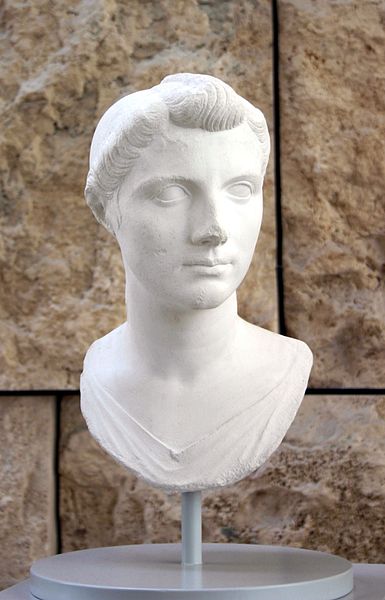
The only reason this one's in such good shape is that it's a cast of the original, not the original itself.
[Cast of a bust of Octavia Minor from the Ara Pacis, photo 2008, source: Wikimedia Commons]
Octavia Minor (69 - c. 11 BCE) was a woman at the heart of early Julio-Claudian politics.  Grand-niece of Julius Caesar, sister of Octavian Augustus,* wife of Mark Antony, mother of Antonia Minor, grandmother of Germanicus** and Claudius, great-grandmother of Agrippina Minor, she was looked to as an example of what a Roman matron should be and like her sister-in-law, Livia Drusilla, understood the influence this gave her.

She was born in southern Italy and spent much of her childhood traveling with her mother and stepfather.  She married Gaius Claudius Marcellus Minor sometime before or during her 15th year, as it was in this year that her great-uncle offered to have her divorce him and marry Pompey.  The offer was declined and Octavia went on to have three children by Marcellus.  She was pregnant with the third when he died in 40 BCE.

This same year, Octavian found himself in need of a way to cement his alliance with Mark Antony.  The chance to marry his sister to the man must have seemed ideal.  And indeed, it was largely through Octavia’s influence that peace was kept between the two men for so many years.  For the first four years of their marriage, Octavia traveled with Antony and lived with him in Athens, raising both of their children from their previous marriages as well as the two daughters* they had together.

In 36 BCE, Octavia returned to Rome, bringing the children with her to live in Antony’s house.  When Antony took up with Cleopatra VII once more, Octavia refused her brother’s request to come live with him, knowing how powerful her own image was and refusing to be the perceived cause of a civil war.  On more than one occasion she worked to provide her husband with troops and supplies.  She only conceded to her brother’s wish after Antony divorced her in 32 BCE.

When Antony died in 30 BCE, Octavia took upon herself the guardianships of his children with Cleopatra alongside the others under her care.  While there was indubitably sentiment involved in the decision, like her sister-in-law Livia, she knew the power she had to support Octavian’s rule, and in raising these children cemented her image as an ideal Roman matron.  Unlike Livia, she was not accused of unseemly ambition, probably in part because so much of her image rested on her status as mother and sister, innate relationships, rather than as wife, an acquired one.  We should not, however, discount the influence she must have held over her children.  It was she who arranged the marriage of Cleopatra Selene II to Juba II of Numidia.  Her daughters and granddaughters were the mothers and grandmothers of emperors and superb politicians in their own right.

*He of the too many goddamn names.
**Husband of Agrippina Major.

Sources/Further Reading:
Cassius Dio, Roman History (books 48, 49, 50, & 51) - Lacus Curtius
Plutarch, Life of Antony - Lacus Curtius
Suetonius, Life of Julius Caesar, Life of Augustus - Lacus Curtius
Appian, Civil Wars, Book V - Lacus Curtius
Octavia the Younger - Wikipedia
0 Comments

Medieval Concubines and Their Patrons

24/10/2014

0 Comments

 
As it had been in Ancient Rome, concubinage in medieval Europe was often seen as a less permanent, marriage-like relationship, usually (though not always) between a higher status man and a lower status woman.  Throughout this time, concubines and their patrons faced suspicion and disapproval from Church authorities, but the practice was common enough to all levels of society that no one dared ban it outright (even when they wished to) until the 16th century.

There were several reasons a person might want to enter into such a relationship rather than marriage.  For a woman, this often meant some increase in status and wealth, even when it wasn’t permanent.  Her future was reasonably well assured and she got to keep the gifts her patron gave her.  There was also the possibility that her patron might eventually marry her, as happened to Angelberga, though this may have been somewhat more likely when both concubine and patron were of the nobility.  Her family might also encourage such a relationship, not only because any increase in her status enhanced theirs, but also because a concubine required no dowry.  However, she also suffered several legal disabilities.  She inherited very little if her patron died intestate, her children were illegitimate, and her patron could abandon her much more easily than he could a wife.

On the patron’s side of things, he got the status and the assumption of stability that came with having a long-term monogamous* relationship with an easier out than marriage gave him.  He was also less restricted in his choice of partner, though politics would still have had a bearing on it if he were of the nobility.  Since a concubine’s children were not legitimate unless their father married their mother, they did not lessen the inheritance of his legitimate children much, if at all.**

The thing is, it was often difficult to tell the difference between a concubine and a wife.  Sometimes the couple themselves may not even have had a clear idea, especially in the lower classes.  By the 12th century, priests’ wives were concubines legally but wives socially.  Canon law on consent and secret marriage meant that if the issue ever came to the court, it could easily come down to one person’s word against another’s and people could easily find themselves with a marital status quite different from what they had assumed.


*Usually monogamous anyway.  There were exceptions and not just one-man-two-women exceptions.
**In some places and times a concubine and her children inherited a smaller portion than legitimate wives and children.  In others, they got nothing but the gifts he had already given them and anything he left them in his will if he had one.

Sources/Further Reading:
Brundage, James A. Law, Sex, and Christian Society in Medieval Europe. Chicago: University of Chicago Press, 1987.
Brundage, James A. "Concubinage and Marriage in Medieval Canon Law." Journal of Medieval History (1975): 1-17.
Dübeck, Inger. "Women, Weddings and Concubines in Medieval Danish Law." Scandinavian Journal of History 17.4 (1992): 315-322.
Rawson, Beryl. “Roman Concubinage and other De Facto Marriages.” Transactions of the American Philological Association 104 (1974): 279-305.
Marriage Canons in The Decretum of Gratian - Catholic University of America
0 Comments

Gendered Space in Roman Houses

22/10/2014

0 Comments

 
I have mentioned before that Roman houses do not divide easily along gender lines and indeed were not intended to.  There was no idea that the house in general was female space, nor that, as was the case in many Greek city-states, there should be a specific division within the house between male and female space (physical or conceptual).  We can tell sometimes where people were, but social status and privacy were far more relevant than gender in determining this.

Unlike in many Greek city-states, Roman houses in Italy had no andron or men’s dining room.  Men and women dined together with little differentiation between them, though according to Valerius Maximus it was for a time common practice to seat women in chairs rather than have them recline on couches as men did.  This custom, however, seems to have mostly died out by his time (1st cent. CE).

Modern “common sense” would have us believe that women’s domestic activities would be kept to the more private parts of the house.  Given, however, that weaving generally required a fair amount of light, so it is perhaps unsurprising that evidence of it, usually loom weights, is most often found in the atrium, peristyle or garden, and the smaller rooms off of these spaces.  Whether the activity was kept to a time when there might be fewer clients in the house or displayed to show the wife’s diligence is unknown, though the latter seems far more likely.

There are two spaces that can be argued to belong to the paterfamilias more than to anyone else.  The first of these is the tablinum, the record room, where he greeted his clients in the morning.  From here he dominated the house and though others might enter the room, it was indisputably his space.  The others is the small set of highly decorated rooms found just beyond the peristyle garden.  Some have argued that these were the women’s quarters, but that would make much more sense in a Greek house.  A more convincing argument has been put forth that these were rooms used by the paterfamilias for private business meetings.  Their depth within the house, seclusion, and rich decoration both highlight the status of these rooms and make them ideal for these encounters. 

The issue of slavery throws another complication into the mix.  Slaves cannot be said to have any space of their own in these houses except perhaps the service areas (where they existed), but they went everywhere within them. While some rooms can be tied to certain people or groups of people, gender was not a primary concern in differentiating the house.

*Which are far more likely to have survived than the looms themselves.

Sources/Further Reading:
Allison, Penelope M. "Engendering Roman Domestic Space." British School at Athens Studies 15 (2007): 343-350.
Hales, Shelley. The Roman House and Social Identity. Cambridge: Cambridge University Press, 2003.
Wallace-Hadrill, Andrew. "The Social Structure of the Roman House." Papers of the British School at Rome 56 (1988): 43-97.
Wallace-Hadrill, Andrew. Houses and Society in Pompeii and Herculaneum. Princeton, NJ: Princeton University Press, 1994.
0 Comments

Theodora Porphyrogenita

20/10/2014

0 Comments

 
Note: So this is the 150th of these things that I've written and I've been doing this for just over a year.  Cool!
Picture
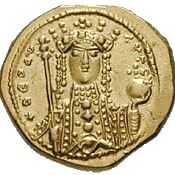
There are also coins depicting her with her sister, but this one seemed appropriate.
[Coin depicting Empress Theodora (Christ on obverse), 11th century]
[Source: Wikimedia Commons]

Empress Theodora Porphyrogenita (980-1056 CE) was the younger sister of Zoe Porphyrogenita.  In her later life she co-ruled with her sister until Zoe married Constantine IX.  After his death, ruled as Emperor until her own death.

As with her sister, we know very little of her early life other than that she was probably raised in luxury in the women’s quarter of the palace and received an education befitting a Byzantine princess.  When she was 40 however, Theodora to marry his chosen successor, Romanos Argyros.  She refused on the grounds that she considered him still married,* leading to her sister became Empress instead.  For this among other reasons, Zoe became jealous and soon exiled Theodora to a monastery on conspiracy charges, eventually forcing her to become a nun.

When the people of Constantinople rose and deposed Zoe’s adopted son Michael, they also went to fetch Theodora, intending to make her Empress.  She did not go willingly and had to be dragged out of her monastery.  Once out, however, she showed her strength of personality and a willingness to do what she had to.  One of her first acts was to have the previous emperor Michael blinded and packed off to a monastery.

The two sisters, Zoe and Theodora, ruled together for seven weeks** before Zoe gave the Empire into the hands of Constantine Monomachos.  Theodora was apparently excluded from all power at this point, though she retained its outward signs.  As Constantine lay dying in January 1055 he tried to prevent her from taking the throne.  Theodora, however, would have none of this and was proclaimed Emperor and autokrator (sole ruler) just after his death.

At this point many expected her to pick a man to marry and make Emperor, because she was a woman and because she was in her 70s.  Taking her late sister’s example as a warning, however, she chose to rule in her own right.  She was often criticized for being short-tempered and distrustful of Constantine’s appointees,*** but she ruled well, keeping her nobles in line where they had previously had free reign.  When the general Bryennios rebelled, she stymied his attempts to take the throne.  She died in August 1056 at age 76, just over a year and a half after becoming the second woman to act as sole ruler of the Byzantine Empire.

*His wife had become a nun so he could be Emperor.  Whether this was one of her actual reasons or an excuse is something we cannot know.
**Michael Psellos claims that it was a dismal failure, but his general misogyny and dislike of their love of entertainment should be taken into account.
***And by the Patriarch for appointing bishops, as he considered that his job, not hers.

Michael Psellos, Chronographia (Books Five, Six, and Seven) - Internet History Sourcebooks Project
Garland, Lynda. Byzantine Empresses: Women and Power in Byzantium AD 527-1204. London: Routledge
, 1999.
Theodora (11th century) - Wikipedia

0 Comments

Public and Private in the Roman House

17/10/2014

0 Comments

 
Unlike Greek houses, Roman houses were not intended to divide (physically or conceptually) on gender lines.  Other social divisions held much greater sway, the most important of which were social status and privacy.  The latter here is not, however, the modern notion of public and private.  There was no clear division of inside/private, outside/public.  Rather, public space entered into the house gradually becoming more private further inside.

The entryway/atrium/tablinum section of the house was what clients saw when they came to see their patron for the morning salutatio.  It was not wholly public in the way the forum was, but basically anyone could enter the vestibulum and atrium during certain times of day.  While most needed an invitation to the tablinum, where the paterfamilias sat, it was still a place where relatively public business was conducted and, as such, needed to show off the status of its master.

Deeper into the house was another public area: the peristyle garden.  Its architecture, specifically the colonnades, consciously evoked the appearance of government buildings.  Here the family might entertain a large group of important visitors.  Like the atrium etc., it was meant to impress upon the viewer the high status and wealth of the house’s owner.  Smaller, far more private gatherings might be held in the triclinium, the dining room, used by the master of the house and his guests.  Unlike the other rooms discussed so far, this room was open only to those who had a specific invitation.

The small rooms opening onto the more public spaces of the house were used for a variety of purposes, and while they all tended to fall on the more private end of the scale, they varied in status.  Some might be bedrooms/boudoirs* or somewhere for the paterfamilias to hold private meetings, while others were used merely for storage.  Some houses were big enough to have an entire service complex (kitchen, food storage, laundry etc.).  These tended to be hidden from view by long corridors and sharp corners.  If the house wasn’t big enough for this, the kitchen could usually be found off one of the more public spaces of the house.**  Even the private spaces of the house were private only to the household at large and domestic activities we might consider private, like weaving or cooking, were not infrequently carried out in the more public spaces.


*Only the highest status people in the house might have a bedroom and sometimes even they didn’t.  A bedroom, after all, was a waste of space.  Better to have a room for another purpose that also had a bed in it.  Lower status members of the household would have slept in the more public spaces of the house.
**Precisely which public space varied by house.

Sources/Further Reading:
Vitruvius, De Architectura (Book VI) - Project Gutenberg
Allison, Penelope M. "Domestic Spaces and Activities." In The World of Pompeii, edited by John J. Dobbins and Peder W. Foss. New York: Routledge, 2007.
Hales, Shelley. The Roman House and Social Identity. Cambridge: Cambridge University Press, 2003.
Wallace-Hadrill, Andrew. Houses and Society in Pompeii and Herculaneum. Princeton, NJ: Princeton University Press, 1994.

0 Comments

The Founding of Fontevraud

15/10/2014

0 Comments

 
At the beginning of the 12th century, Robert of Arbrissel found himself with a problem.  As has sometimes happened to holy people (usually but not always men) throughout history, the French hermit-turned-preacher had acquired a large following.  The people who congregated around him came from all walks of life; as his first vita says, “Many men of every condition came; women, poor and noble, widows and virgins, young and old, whores and man-haters assembled.”  They all lived and worked and listened to Robert’s preaching together, with little to no separation between the sexes.  Even with his holy reputation, this left both him and his companions open to scandal and accusations of heresy.

Picture
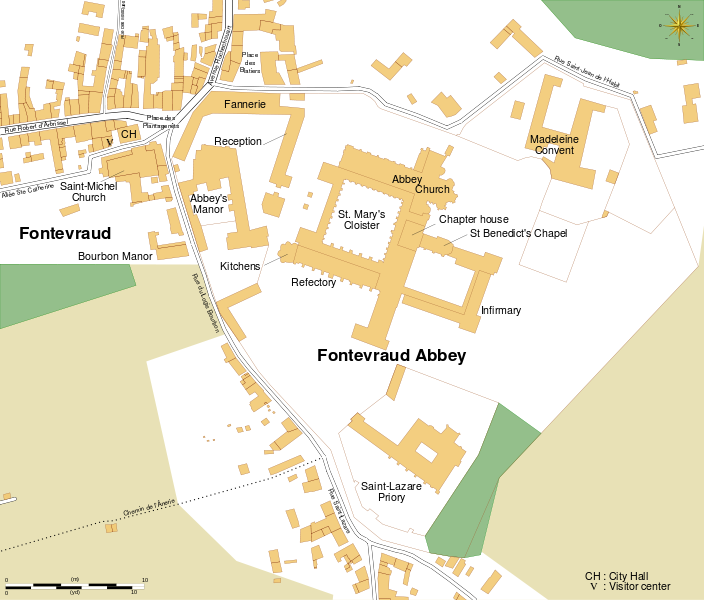
According to legend, the place started with 3000 inhabitants.  Even if that's an exaggeration, there were still a lot of people.
[Map of Fontevraud Abbey, created 2012, source: Wikimedia Commons]
Robert did what many before him had done:  he founded a monastery, in this case a double one.  Double monasticism, communities containing both monks and nuns, had died out a few centuries prior, but with many Orders closing their doors to women, it must have seemed a better solution to the problem of providing for the nuns’ spiritual needs that two separate communities.  He subordinated the monks to the nuns, setting the latter to silent contemplation in the cloister, and the former to provide for their needs.

So great was the attraction of both this new monastery and Robert’s preaching, that he ended up founding several other houses within the Order.  He left Hersende as prioress and Petronilla of Chemillé, a widow and one of his early followers, as her assistant to oversee the construction and organization of the motherhouse.  Before Robert died, he made Petronilla Abbess, stipulating that the Abbess should always be a woman who had been married, not a consecrated virgin,
because such a woman would already have experience navigating the secular world .

Picture
The central portion of the Abbey as it stands today.  There are no monastics living there as the order was dissolved in 1792 during the French Revolution.*
[
Fontevraud, photographed 2005, source: Wikimedia Commons]
Petronilla was a shrewd, strong-willed woman who knew what was needed, as were several of her successors.  The community went on to receive the patronage of Eleanor of Aquitaine, who retired there and was later buried there along with her second husband and son.  The idea of a double monastery, however, seems to have made some people uncomfortable.  Though the monks were the more visible members of the community, as they labored for its support and were often involved in negotiating donations to it, it was and has continued to be referred to primarily as a community of nuns.


*It has since restarted, but is not located within the Abbey.  Additionally, there are no Fontevrist monks, only nuns.

Sources/Further Reading:
Venarde, Bruce L., trans.  Robert of Arbrissel: A Medieval Religious Life. Catholic University of America Press, 2003. [Note: This contains Robert of Arbrissel's two vitae.  It can be found on Google Books here.]
Gold, Penny Schine. "Male/Female Cooperation: the Example of Fontevraud." In Distant Echoes: Medieval Religious Women, edited by John A. Nichols and Lilian Thomas Shank, 151-168. Kalamazoo, MI: Cistercian Publications, 1984.
McNamara Jo Ann. Sisters in Arms: Catholic Nuns Through Two MiIlennia. Harvard University Press, 1996. [Note: Can be found on Google Books here.]
Fontevraud Abbey - Wikipedia
Robert of Arbrissel - Wikipedia
Order and Abbey of Fontevraud - Catholic Encyclopedia
0 Comments

Archidamia, Queen of Sparta

13/10/2014

0 Comments

 
Note:  Because of the eclipse last Wednesday (which, by the way, was awesome) I really wanted to write about Aglaonike of Thessaly, one of the first known people to have worked out how to predict lunar eclipses.  Unfortunately, this and the fact that some people thought the moon actually obeyed her are really all we know about her.  So you get an awesome Spartan queen instead of an awesome astronomer.

Archidamia, also spelled Arachidamia, of Sparta (4th & 3rd centuries BCE), like her predecessor Gorgo was a politically active queen.  Along with her daughter Agesistrata she was also one of the two wealthiest people in Sparta.  She is best known for her actions during Pyrrhus’ Siege of Sparta and her later support of her grandson and great-grandson Agis IV’s attempts at reform.

We know basically nothing about her early life.  At some point she married King Eudamidas I by whom she had two children: Archidamos IV and Agesistrata.  Her daughter went on to marry her own nephew, Eudamidas II, and had a son by him, Agis IV.

In 272 BCE, when Archidamia was already middle-aged, that Pyrrhus besieged Sparta.  The Spartan council of elders, knowing that with most of their armies fighting in Crete, worried about the survival of the city.  They debated sending the city’s women to Crete.  Archidamia would have none of this.  She came before them holding a sword and berated them for thinking that Spartan women would wish to survive the fall of their city.  The women stayed.  They helped dig a defensive trench* and, once battle was joined, brought the fighters food, water, and weapons as needed and helped bring the wounded from the battlefield.  Pyrrhus and his army were soon forced to flee.

In her old age, Archidamia supported the attempts of her (great-)grandson Agis IV to reform Sparta according to the laws laid out by Lycurgus, taking it back to the austere values it had held so dear.  As the two richest people in Sparta** she and Agesistrata donated much of their wealth to a common pool for redistribution.  The exact nature of her support beyond this is unknown, but it must have been substantial.  When Agis was murdered by his enemies, they found her enough of a threat to kill her immediately afterwards, despite her age.

*And by “helped” I mean dug a third of it themselves.
**Not just women, people.

Sources/Further Reading:
Plutarch, Life of Pyrrhus 27, 29 - Lacus Curtius
Plutarch, Life of Agis 4, 7-9, 13, 16-20 - Lacus Curtius
Pomeroy, Sarah B. Spartan Women. New York: Oxford University Press, 2002.
Hodkinson, Stephen. "Land Tenure and Inheritance in Classical Sparta." The Classical Quarterly 36.2 (1986): 378-406.
Arachidamia - Wikipedia
Archidamia - Perseus (This is actually a modern poem to her, but I thought it was cool.)
0 Comments

Men in Byzantine Female Monasteries

10/10/2014

0 Comments

 
Ideally, men would be entirely barred from Byzantine female monasteries and women from male monasteries.  In practice, however, this was far more difficult a prospect for nuns than for monks.*  There are some offices within a monastery that women were (and still are) forbidden from holding.  These roles had to be filled by men, who then had to be given some access to the grounds of the monastery.  Though the founders of these communities laid out precautions, they couldn’t keep them all out.

No monastery could function without a priest.  The monastery of Kecharitomene had two, preferably eunuch monks.**  The founder of Bebaia Elpis felt that it would be better to have single priest, an older man.  Some of these communities, however, minimized the priest’s importance, giving most of the liturgy into the hands of the nuns.

In addition to priests, the nuns needed a spiritual father.  His exact position varied between communities varied, but at the very least he heard the nuns’ confessions and gave them spiritual advice.  The typikon for Kecharitomene says little about him, merely that he should be a eunuch monk like their priests.  He played a much larger role at Lips, where the Superior was required to consult with him on most of her major decisions.  He could also remove her from office if he had the agreement of the leading nuns.

The steward was responsible for the community’s financial affairs.  This included the management of both the monastery proper as well as of its lands outside.  Kecharitomene required that the steward be a pious eunuch and that he be accompanied wherever he went within the monastery.  The communities of Bebaia Elpis and Neilos Damilas, meanwhile solved the problem of allowing a male steward onto the grounds by appointing a nun instead.

These were not the only men who might be required to enter a female monastery.  They needed doctors to care for sick nuns, gravediggers for funerals, and laborers to restore and maintain their buildings.  Many communities allowed their nuns to speak briefly with family members at the gates, though male relatives were never allowed in.  The Superiors of these monasteries also had to play politics to ensure the survival of their communities, which sometimes meant dining with powerful men.  While the desire was to bar men from nuns’ spaces, it wasn’t feasible to ban them entirely.


*Not that male monasteries had an easy time living up to this ideal either.  They basically had to retreat to their own mountains from which they banned women entirely.  Mount Athos is one such that still exists today.
**If none such could be persuaded to take the position, the community was instructed to seek out a secular priest who was a eunuch.

Sources/Further Reading:
Thomas, John and Angela Constantinides Hero, eds. Byzantine Monastic Foundation Documents: A Complete Translation of the Surviving Founders’ Typika and Testaments. Washington, DC: Dumbarton Oaks, 2000. [Text may be found here.]
Empress Irene Doukaina, Typikon of Kecharitomene, 1110-1116, translated by Robert Jordan - Dumbarton Oaks
Theodora Palaiologina, Typikon of Lips, 1294-1301, translated by Alice-Mary Talbot - Dumbarton Oaks
Theodora Synadene, Typikon of Bebaia Elpis, 1327-1335, translated by Alice-Mary Talbot - Dumbarton Oaks
Typikon of Neilos Damilas, 1400, translated by Alice-Mary Talbot - Dumbarton Oaks
Talbot, Alice-Mary. "Women's Space in Byzantine Monasteries." Dumbarton Oaks Papers 52 (1998): 113-127.
0 Comments
<<Previous

    My Blog

    Translation of the above: where I post the interesting things I find researching the Classical and Medieval periods in my free time.

    Currently Reading:
    -
    Medieval Monasticism by C. H. Lawrence

    Archives

    March 2016
    February 2016
    January 2016
    December 2015
    November 2015
    October 2015
    September 2015
    August 2015
    July 2015
    June 2015
    May 2015
    April 2015
    March 2015
    February 2015
    January 2015
    December 2014
    November 2014
    October 2014
    September 2014
    August 2014
    July 2014
    June 2014
    May 2014
    April 2014
    March 2014
    February 2014
    January 2014
    December 2013
    November 2013
    October 2013
    September 2013

    Categories

    All
    Architecture
    Biography
    Classical
    Law
    Marriage (legal And Otherwise)
    Medicine
    Medieval
    Misconceptions
    Monasticism
    Overview
    References
    Religion
    Review

    RSS Feed

Powered by Create your own unique website with customizable templates.