Emily Kittell-Queller
  • Home
  • About Me
  • Blog
  • Projects
  • Resume
  • Contact Me

Sappho

29/11/2013

0 Comments

 
Picture
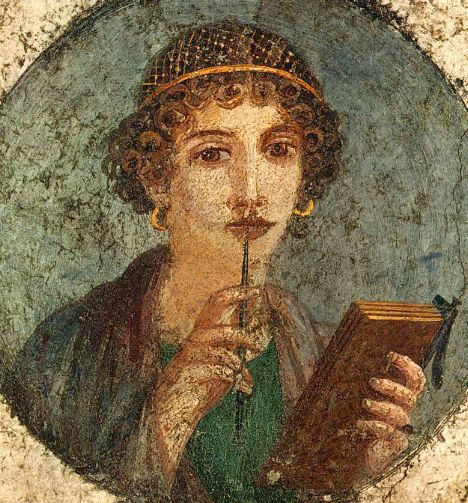
This is really just an image of a lady with a stylus, but somebody decided it must be Sappho.  So the lady in this painting has been called Sappho ever since.
["Sappho," 50 CE, Museo Archeologico Nazionale di Napoli]
[Source: Wikimedia Commons]

Despite her immense reputation, we actually don’t know much about Sappho as a person or what her life was like.  A big part of the problem is that the earliest sources we have that cover that sort of information, other than her poetry itself, all date to the 1st and 2nd centuries BCE, more than four hundred years after she died.  Also, that story about her committing suicide over a ferryman by jumping off a cliff?  Completely apocryphal and probably invented around the 2nd or 3rd century BCE.  So basically, almost everything we know for sure about her life comes from her poetry.

So what do we know?  Sappho lived on Lesbos in the late 7th century BCE, though she was exiled to Sicily for a time.  It is possible that she had a daughter named Kleïs and highly probably that she was born into an aristocratic family.  She wrote wedding songs in addition to the poetry pertaining to her personal life.  She appears to have had an ongoing rivalry with a fellow poet named Andromeda.  We now know her best for her romantic connections to the young women of her circle, though her poetry shows that she had relationships with men.

Her poems were collected into nine volumes by the Library of Alexandria.  Today, only one complete poem* and just shy of 200 fragments remain.  Both the Ancient Greeks and the Romans considered her one of the greatest lyric poets.  Catullus was particularly taken with her work and translated at least one of her poems, Fragment 31, into Latin (Catullus 51).  In the 18th and early 19th centuries, a tradition among female English poets of writing at least one poem from the point of view of Sappho about to jump off the cliff.  It was only in the late 19th century when Pierre Louÿs claimed to have found and translated the Songs of Bilitis** that Sappho became associated specifically with lesbianism.  Her reputation is immense, but she lived so long ago that common knowledge about her has shifted and changed drastically over time.


*Or possibly two.  Whether Fragment 31 is incomplete or if it just happens to have the first line of another poem tacked onto the end is still up for debate, and probably will remain so unless someone finds another manuscript.

**Yeah, he wrote them all himself.  Well, sort of.  It turns out he stole some of it from the Palatine Anthology and other bits from Sappho herself.

Further Reading:
Sappho. If Not, Winter: Fragments of Sappho. Translated by Anne Carson. New York: Vintage Books, 2002.
Sappho - Wikipedia
The Poems of Sappho - Internet Sacred Text Archive (Note: Anne Carson's translations are better, but as they're not online, have these instead.)
Sappho 31 - Wikipedia
Catullus 51 - Wikipedia

Sappho and Phaeon, by Mary Robinson - Internet Sacred Text Archive
0 Comments

Dowry

27/11/2013

0 Comments

 
Note: Please be aware that since this a really broad topic, this post is going to be full of massive oversimplifications.  It is still, I hope, a good overview.
Picture
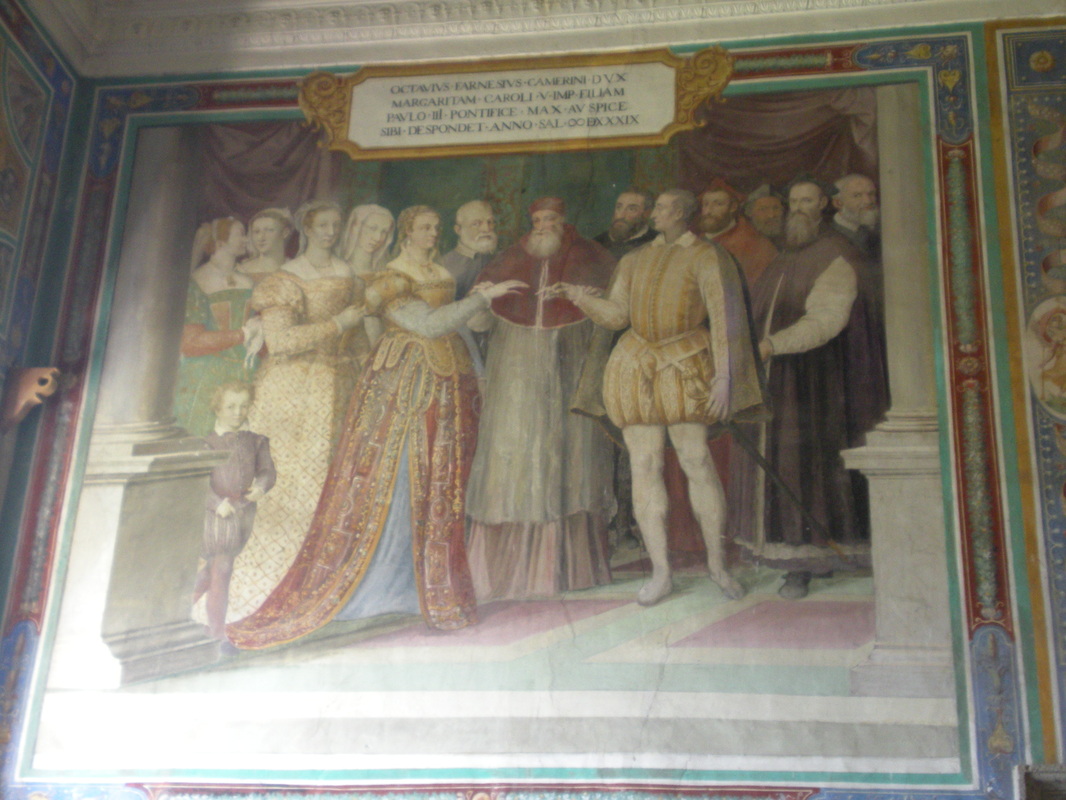
You wouldn't be getting this not so good version of this if I could find any other on the internet.
["Marriage of Margaret of Austria to Ottavio Farnese," Palazzo Farnese]
[16th century, photographed by me]
When people talk about marriage in historical contexts, the topic of dowry usually comes up.  It’s the goods or money a bride’s family pays to the husband when they get married.  Well, not really.  That’s sometimes how things turn out in practice, but not always.  The cultural concepts and significance surrounding it were and are also a lot more complicated than that.

First of all, it’s important not to get dowry confused with dower.  Dowry comes from the wife and her family, dower from the husband and his family.*  I’ll talk about dower some other time, but the important thing to remember is that while they function differently, both have something to do with helping a household deal with the addition or loss of one of its members.

In both Ancient Rome and Medieval Europe, the dowry was intended, at least in part, to contribute to a wife’s support after her marriage.  Dotal property, as it is known, went under the husband’s control while he was still alive, even if it technically belonged to her.  Because of this, many places had laws penalizing a husband who misspent his wife’s dowry.

In the event of a divorce or the death of the husband, a dowry reverted to his widow or her father.  In Ancient Rome, who the dowry went to at this point depended on whether the widow’s father was still her guardian.  In Medieval Italy, the dowry reverted to her control automatically, along with any other property she owned.

One other important thing to talk about here is the connection between wealth and honor.  The size of a dowry in a lot of ways indicated a bride’s worth, meaning not only her family’s wealth, but also its standing and honor.  Some marriages were called off due to loss of a dowry.  In other cases young women and their families were able to use the size of a dowry as a bargaining chip in marriage negotiations.  While dowry may have been an indicator of worth in society, women used it to their own benefit as much as men did.

*Usually.  Enough people use the two terms fairly interchangeably that this is more of a guideline than a hard and fast rule.

Further Reading
Mary Lefkowitz & Maureen Fant, Women's Life in Greece & Rome: A Sourcebook in Translation
Dowry - Wikipedia
0 Comments

Four Emperors - The Roman Tetrarchy

25/11/2013

0 Comments

 
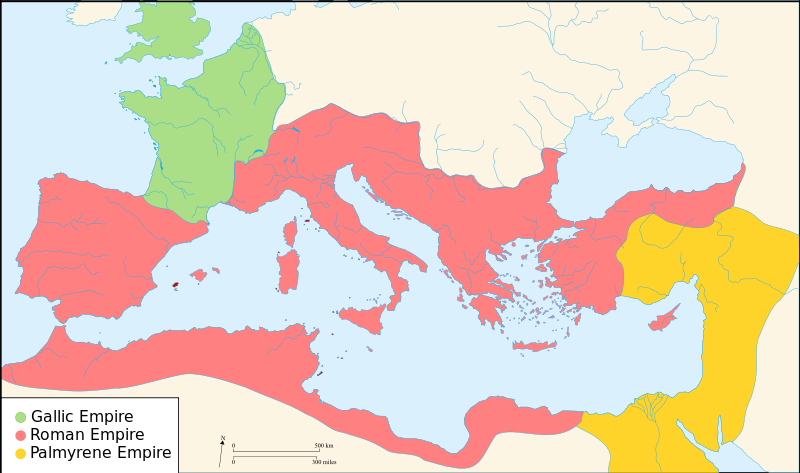
By the early 3rd century, the Roman Empire had gotten too large to be stably ruled by one man.  In 235 the empire entered the time known as the Crisis of the Third Century.  Civil war, plague, economic depression, and other pressures threatened to cause complete collapse.  Military leader after military leader declared himself emperor only to be deposed and killed shortly thereafter.
Picture
Here's one of the ways the empire temporarily split during this time period.
["Map of Ancient Rome 271 AD," created by historicair]
[Source: Wikimedia Commons]

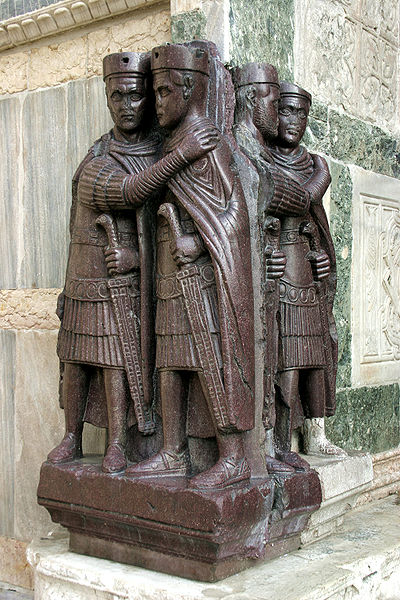
All of this ended when Diocletian took power in 284.  See, he recognized that the crises and even the day to day running of the empire were too much for one person to deal with.  So he appointed Maximian as co-emperor.  Both took the title Augustus and divided the empire between them, with the eastern half under Diocletian and the western half under Maximian.  When this was not enough, they appointed two junior emperors, Galerius and Constantine (No, not that one.  We'll get to him later.), to help them in 293.  Each ruled a section of the emperor from a separate capital city, none of which was Rome.  Thus began a time of comparative stability in the empire, helped along by monetary reform, increased bureaucracy, increased social mobility, and the hope of a clear succession.
Picture
This is one of those things that was stolen by the Venetians in the Fourth Crusade.  One foot remained behind, where it was discovered by an archaeologist in the 1960s.  Imagine being the person to find that.
["Portrait of the Four Tetrarchs," 4th century]
[Photographed by Nino Barbieri, Source: Wikimedia Commons]

It was not to last.  When the two Augusti retired, the two Caesares took over and appointed their own Caesares.  Things remained peaceful for about a year before Constantine died.  Over the next few years there were several people claiming the title of Augustus: Galerius (who already had it), Severus (Caesar to Constantine), Maxentius (Maximian’s son), Maximian (the guy who had already retired),Maximinus (Galerius’s adoptive son), Constantine (yup, the one you’re thinking of), and Licinius (who I find about as memorable as Lepidus).  The short version of the story is that the system all went to hell.  By 313, all but two claimants to the title were dead, and only one of them, Galerius, of natural causes.  The last two remained co-rulers and rivals until 324, when Constantine finally defeated and killed Licinius.  Thus ended the Roman Tetrarchy.

Further Reading:
Tetrarchy - Wikipedia
Diocletian - Wikipedia
Maximian - Wikipedia
The Tetrarchy - History of Rome (This is an audio file. The reader/speaker is a little dull, but there's some good information in it.)
0 Comments

The Beguines - A Brief Overview

22/11/2013

0 Comments

 
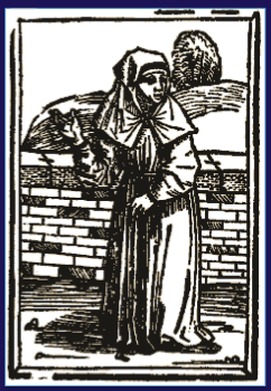
In the history of the Roman Catholic Church there has only been one religious movement that was started by women and remained predominantly female throughout its history.  These were the beguines (French) or begijnen (Dutch/Flemish).  The exact origins of the movement are unknown, but it was definitely centered around the Low Countries and probably started in the late 12th century, though they spread to what are now France and Germany as well.
Picture
I wonder who she's talking to.
[A drawing of a beguine from Des dodes dantz, 1498, printed in Lübeck]
[Source: Wikimedia Commons]
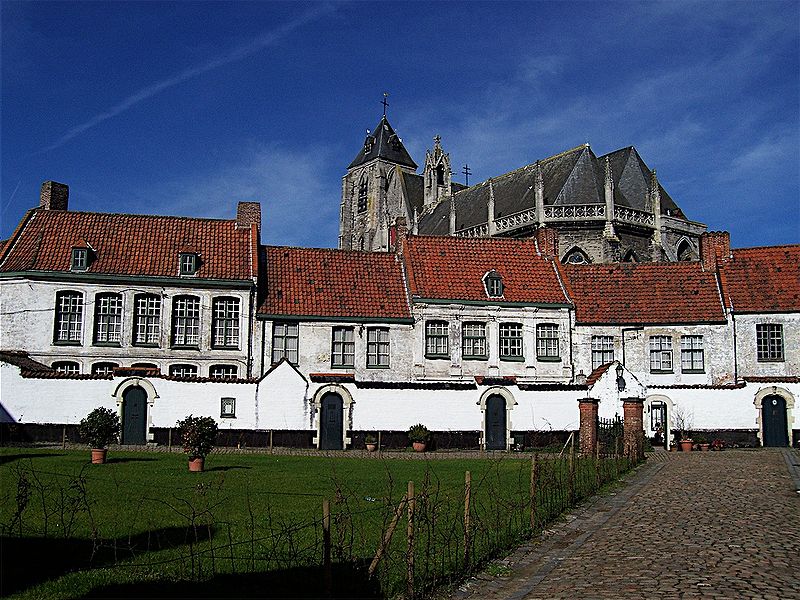
These were women who dedicated themselves to a religious life while still living within the world.  In other words, while they were not nuns, they were not lay people either.  They devoted their lives to God, making promises similar to the vows of nuns: poverty, chastity, and obedience.  Promises, not vows.  Nor did they seclude themselves from the world as nuns did.  Beguines lived and worked in cities.  Where there were enough of them, they built their own chapels and homes around secluded courtyards.  Where they were fewer, they lived with everybody else.
Picture
Some beguinages/begijnhoven are still inhabited, though not by beguines.  I'm not sure about this one.
["Kortrijk Begijnhof," photographed by Lamadude]
[Source: Wikimedia Commons]

They have often been compared to the begging orders of Saints Francis and Dominic since they lived and worked for and with the poor in cities, but there is a key difference: for the most part the beguines supported themselves.  They were employed in every occupation open to women in the Low Countries of the 12th, 13th and 14th centuries.  They owned property individually as members of no other religious order did.  It is easier to compare them to Franciscan and Dominican tertiaries* and in some cases it is very difficult to tell whether to place a woman in the category of beguine or mendicant tertiary.

This confusion over categorization is the overarching theme I see here.  In their lives they crossed the boundaries of religious and lay, of social class, and, through their reputation for extreme holiness, heaven and humanity.  Because of this they were venerated.  For a time.

*Lay persons who did/do not take religious vows, but participate(d) in the works of the Order and lived according to some of the Order’s rules.

Further Reading:
Cities of Ladies by Walter Simons
Beguines and Beghards - Wikipedia
Beguines - Catholic Encyclopedia
Beguines - Kenyon.edu

Note: These websites present as fact some information that is currently being or has recently been disputed by historians.  It's interesting stuff, but take it with a grain of salt.
0 Comments

Contubernium

20/11/2013

0 Comments

 
Picture
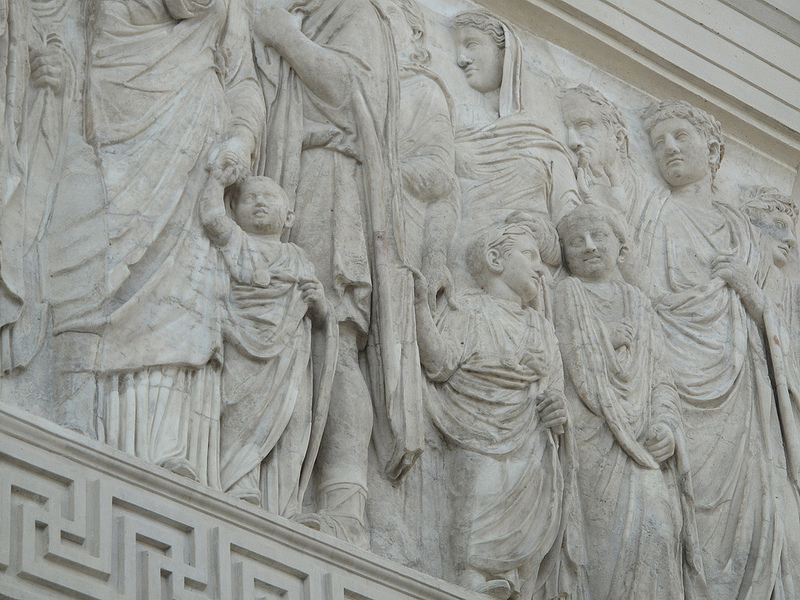
Finding pictures for this sort of thing is difficult when scholars assume that any image of a male-female couple must have been of married people.  Have a picture of some parents and children.
["Children on the Ara Pacis," 9 BCE]
[Photographed by isawnyu, Source: Flickr]
Contubernium* in Ancient Rome, like concubinage, was a type of what is sometimes called de-facto marriage or quasi-marital union.  In this case the impediment wasn’t the difference in status between partners, but the slave status of one or both partners.  Such relationships were recognized, though not legally and differed from marriage in some of the same ways as concubinage.  Any children the couple had would be illegitimate and would follow their mother’s status.

While monogamy might have been the ideal in these relationships as in marriage and concubinage, particularly for the female partner, not everybody followed it.  A study of inscriptions in Rome referring to concubinage and other de-facto marriages found nine that where one person had more than one contubernalis.  Yet another lists a woman as wife to one man and contubernalis to another.  Most probably refer to consecutive relationships, but there is evidence in at least the last one to suggest the possibility of concurrent ones.

The greatest area of concern for moralists and jurists alike were relationships between free women and slave men, which both inscriptional and legal evidence suggest were not uncommon.  Since in Roman society, the male partner was supposed to be of higher status and wealth, such unions were discouraged.  Late imperial jurists attempted to suppress them.  There are always those who go against such pressures, and there enough examples of lower class free women in contubernium with male slaves even after these laws were put in place to suggest that such measures were ineffectual at best.

Additionally, there are numerous examples of freewomen, often freedwomen or the daughters of freedpersons, entering into relationships with male slaves who had risen to positions of power under rich masters.  It would have been an attractive proposition for some women, but for those who held to the prevailing ideals of gender and status, such unions created a paradox.  The man held greater power and wealth, but until he was freed, his partner had the higher status.


*For the curious, this breaks down to con (with) and taberna (hut, booth, or inn).  It is sometimes translated as “cohabitation,” but as that word also describes one of the conditions of marriage in Roman law, I use the Latin term to avoid confusion.

Sources:

Evans-Grubbs, Judith. "'Marriage More Shameful than Adultery': Slave-Mistress Relationships, 'Mixed-Marriages', and Late Roman Law." Phoenix 47.2 (1993): 125-154.

Rawson, Beryl. "Roman Concubinage and Other De Facto Marriages." Transactions of the American Philological Association 104 (1974): 279-305.
0 Comments

Heloise & Abelard

18/11/2013

0 Comments

 
“Let me see no more in your letters, dear Abelard, such murmurs against Fortune; you are not the only one she has persecuted, and you ought to forget her outrages.”
-Héloïse, Letter V
Picture
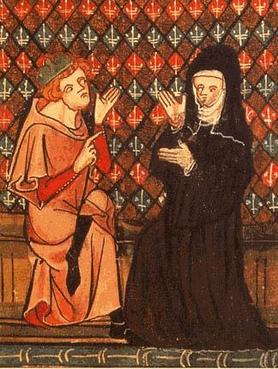
Two brilliant people deep in discussion.
["Abelard and Heloise," Roman de la Rose, 14th century]
[Source: Wikimedia Commons]

The basics of this story are not hard to find: Peter Abelard was hired as the tutor for Héloïse, who was already renowned throughout Europe for her scholarship. They eventually married to placate her uncle, the canon Fulbert, but kept it a secret for the sake of Abelard’s career. She turned up pregnant and gave birth to a son.*  After Fulbert had Abelard castrated anyway, the pair of them turned to the monastic life.  Abelard continued as a scholar and founded a convent where Héloïse eventually became abbess and they wrote letters to each other for the rest of their lives.

Except it’s a lot more complicated than that.  Abelard freely admitted that he went into Héloïse’s household intending to seduce her.  He stopped writing to Héloïse shortly after she took her vows and didn’t actually write again until she wrote to him after coming into possession of a letter he’d written to someone else describing his travails** in the years since he turned monk.  He even admitted that he never intended for her to see that letter.  He later said that the reasons he talked her into taking the veil were that he did not trust her and his own jealousy that she might find someone else after his castration.

Also?  She called him out on his shit.  Multiple times.  You will not find here a woman so desperate for word of her lover that she would take anything he sends her.  She flat out told him he was being a self-centered dick.

Yes, I do think she loved him.  I also think he loved her.  But to view their lives merely as a romantic medieval story of two lovers forever longing for each other is to ignore both their brilliance as scholars and the complexity of their lives.  Also, Abelard was kind of an ass.


*They named him Astrolabe.  Yeah, like the navigational tool.
**To be honest, it reads a lot like whining after a while.  Brilliant philosopher and scholar he may have been, but I quickly lost patience with his “they all hate me because I’m so awesome and smart” crap.

Sources:
The Letters of Abelard and Heloise, trans. Pierre Bayle and John Hughs, 2011, Project Gutenberg
The Love Letters of Abelard and Heloise, trans. Anonymous, 1901, Internet Sacred Texts Archive
0 Comments

The First Papal Conclave (1268-1271)

15/11/2013

0 Comments

 
Picture
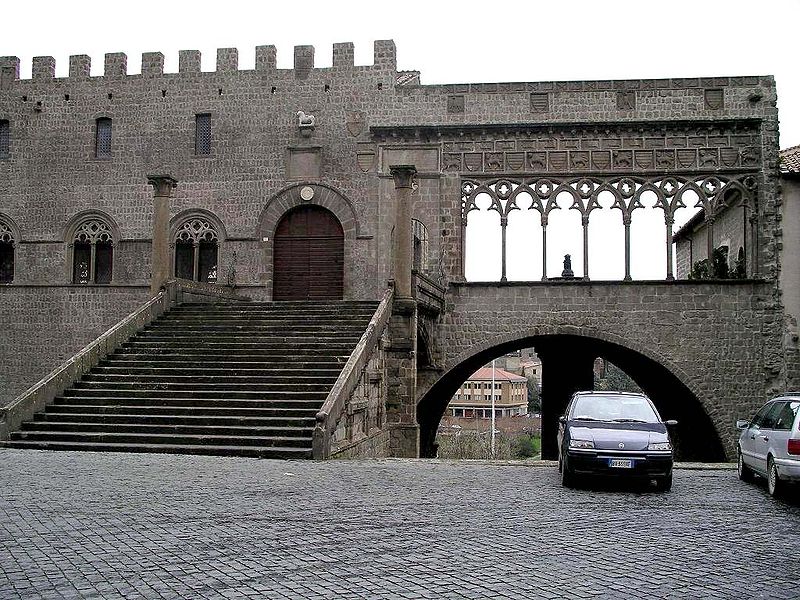
The longest papal election in history took place not in Rome or Avignon, but in Viterbo.
["Papal Palace," photographed by me, 2009]
[Attribution requested]

In 1274 the rules governing the election of a new pope were changed in order speed up the process.  This was also when the policy of conclave (cum clave, meaning “with key” or “locking them in until they elect us a friggin’ pope already”) was established.  What happened to precipitate the rule change?  That would be the papal election of 1268-1271, lasting just shy of three years.  Let me repeat that.  Three years.  It lasted so long that two of the cardinal electors died of old age during the election.

The politics behind this are not really the interesting part.  Scholars debate whether there were two or four parties in the election.  We know for certain that at least six of the cardinals present were seriously considered as candidates.  Four cardinals would later go on to become pope themselves, but not as a result of this election.

Here’s the fun part: deliberations went on for so long and the cardinals met so infrequently that just over a year into the process the magistrates of Viterbo, where the election was being held, ordered them locked in the papal palace adjoining the Duomo.  When that did not work, they refused to feed the cardinals anything but bread and water.  This too produced no result, so they removed the roof from the building.  Some sources even say that this last, the removal of the roof, was actually at the suggestion of one of the cardinal electors.
Picture
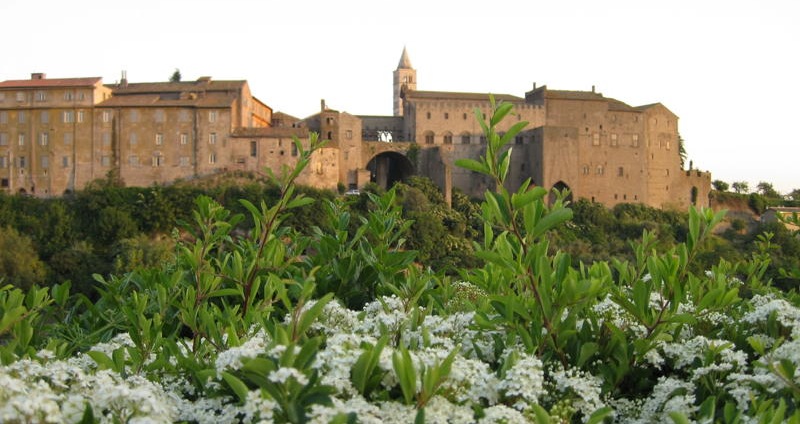
Funny how you can't really see the roof in this shot.
["Viterbo Papal Palace," photographed by Patrickneil]
[Source: Wikimedia Commons]
In the end, on 1 September 1271 they finally agreed that a committee of only six of them would make the final decision.  They chose Teobaldo Visconti, a non-cardinal, as the next pope after what may have been the longest papal election in history.  This is why they lock the cardinals in.  I still think it would be funny if they took the roof off the building, but since they meet in the Sistine Chapel, perhaps that’s not such a good idea.

Further Reading:
Cohn Ronald, Jesse Russel. Papal Election, 1268 1271.
Papal Election 1268-1271 - Wikipedia
Pope Election: Conclave Trivia - Telegraph
0 Comments

Seleukid King Names

13/11/2013

0 Comments

 
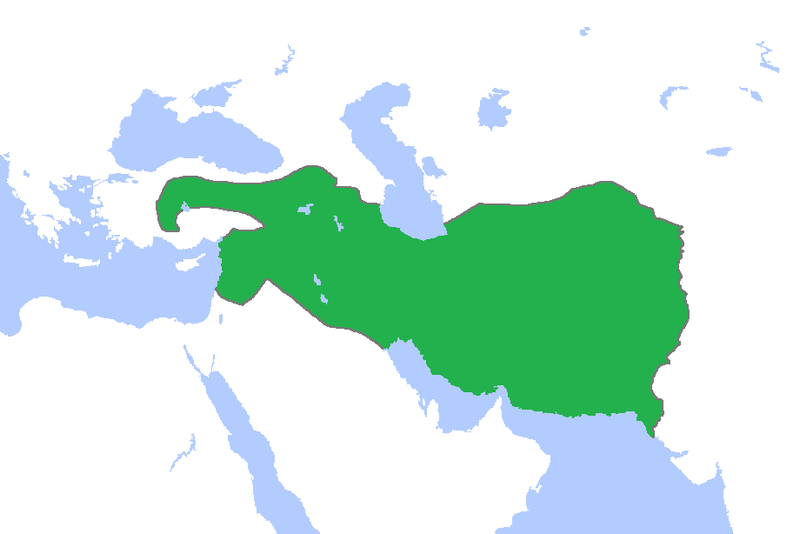
After Alexander the Great died, his empire fractured.  The frustrating thing for students of this time period is the fact that in the successor kingdoms the kings of each line either all have the same name or alternate between two names.  So they all have the same names and the historical documents don’t number them.  However, each king was given an additional name to differentiate him from the others, making things easier on everybody, Seleukid subjects and Classics students alike.
Picture
The Seleukid Empire, everybody.
["Seleucid Empire 301 BC,"]
[Drawn by Gabagool, edited by TRAJAN, Source: Wikimedia Commons]
For now, however, I’m going to focus on some of the more interesting Seleukid* king names from 312-63 BCE.
  • Antigonos I, called Monophtalmus (One-eyed) for what I should assume were obvious reasons.  He was not actually a Seleukid but I include him here because he ruled Babylon and the area around it until it was taken from Seleukos I.
  • Seleukos I, called Nikator (Victor) because of his victory over Antigonos I, who had previously driven him out of Babylon, which had been allotted to him after Alexander’s death.  No Hunger Games references please.
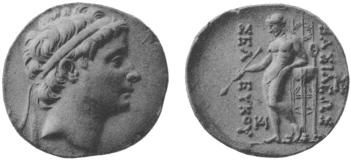
  • Seleukos II, called Kallinikos (Beautiful victor) or Pogon (Bearded).  Funny story, the coins depicting him don’t really show a beard.  Maybe it just got worn off.
Picture
Do you see a beard?  I can maybe see a bit of fuzz in front of his ear.
[Coin depicting Seleukos II, Reverse shows Apollo leaning on a tripod]
[Photographed by ESnible, Source: Wikimedia Commons]
  • Seleukos IV, called Philopator (Father-loving).  Note: this probably means simply that he venerated his father, but it’s worth pointing out that he married his own sister.
  • Antiokos V, called Eupator (Of a good father).  Considering his father was known as Epiphanes (God-manifest), I suppose that’s not surprising.
  • Seleukos V, called Philometor (Mother-loving).  Yeah, his mother had him assassinated less than a year into his reign.
  • Antiokos VIII, called Grypos (Hook-nose), probably for obvious reasons.
  • Demetrius III, called Eukairos (Timely One), possibly a misreading of Aikairos (Untimely One).
  • Phillip II, called Philoromaios.  He was the last king before the Romans deposed him and took over.

Obviously this isn’t all of them, but it’s a good list of the ones I find funny.


*A lot of people use the Romanized spellings: Seleucus, Antiochus, and Seleucid.  I prefer the transliterations from Greek for two reasons.  First, those are the spellings I learned

Sources:

Shipley, Graham. The Greek World After Alexander 323-30 BC. New York: Routledge, 2000.

Wikipedia. "Seleucid Empire." Accessed 12 Nov. 2013. http://en.wikipedia.org/wiki/Seleucid_Empire
0 Comments

Hildegard von Bingen's Migraines - The Debate

11/11/2013

2 Comments

 
"When I was forty-two years and seven months old, the heaven opened and a fiery light of the greatest brilliance came forth and suffused my whole brain and my whole heart and breast with a flame."
-from the Introduction to Hildegard von Bingen's Scivias,
Translated by Anna Silvas
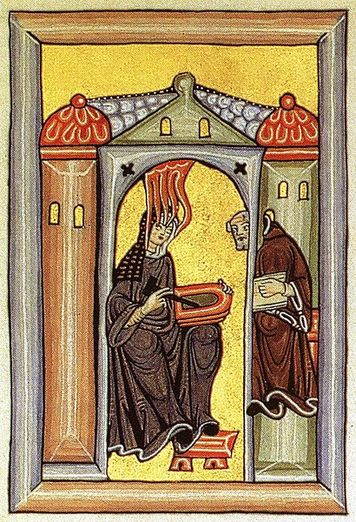
If you look at scholarly works, you will find general agreement that Hildegard von Bingen probably suffered from migraines.  To me it seems likely.  The symptoms she described* line up quite well with the symptoms of migraine auras and headaches.**
Picture
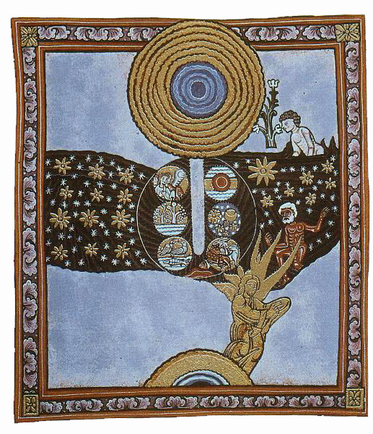
I wonder how many people have also made the Pentecost connection?
["Hildegard von Bingen dictating to her secretary" (probably Volmar)
Rupertsberg Codex,
Source: Wikimedia Commons]

A lot of the less scholarly literature falls into two general camps.  There are those who embrace the idea and use her exclusively as an example of a historical figure who experienced migraines.  Then there are those who stridently insist that such scholarship is pointless and that it is merely an attempt to force the hyper-rationalism of our time where it is not needed.  I disagree with both.
Picture
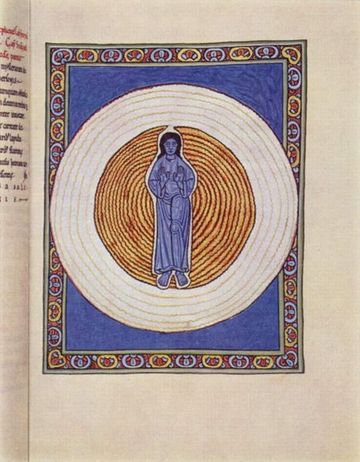
Concentric circles come up a lot.
[Man in Sapphire Blue, Scivias, Source: Wikimedia Commons]
To paint her merely as a famous person who suffered from migraines is to obscure not only her own point of view, but also the ways in which she understood and used her experiences.  She did so many things beyond simply suffering, and to imply otherwise is to deny her achievements and her agency.

To claim that this scholarship is unnecessary is to close off a way of looking at this extraordinary woman that could help us understand her better.  Not only that, but it is to deny others the right to look back into the past and see someone who has suffered the same pain.
Picture
I wish I saw things remotely this pretty.  I mostly get weird crooked lines, sort of like the one down the middle of this.
[The Creation of the World in Six Days, Scivias, Source: Wikimedia Commons]
One thing I see in both of these camps is the idea that the ability to point to a rational explanation for an experience formerly read as divine invalidates Hildegard’s visions.  I particularly see in the second camp a real fear that this is the case.  The thing is, it is her reaction to her experiences that is important.  For the most part, the argument that she had migraines is not an attempt to discredit her.  It is an attempt to better understand Hildegard and her world as well as to provide a new look at our own experiences.

*Working from my own experience of migraines and the extreme sensitivity to light that can come with them, I find her description of the Living Light in the quote above particularly suggestive.

**It is also worth noting that scholars have also suggested that she might have experienced synaesthesia or temporal lobe epilepsy.  All three are entirely possible on their own and none is incompatible with the others.

Sources/Further Reading
Primary Sources:

Hildegard von Bingen. Scivias. Translated by Columba Hart and Jane Bishop. Mawah, NJ: Paulist Press, 1990.

Silvas, Anna. Jutta and Hildegard: the Biographical Sources. University Park, PA: The Pennsylvania State University Press, 1999.

Scholarly Work:

Flanagan, Sabina. Hildegard of Bingen, 1098-1179: a Visionary Life. London: Routledge, 1989.

Lerman, Kristina. "The Life and Works of Hildegard von Bingen (1098-1179)." Internet History Sourcebooks Project. Fordham University.
Accessed 10 Nov. 2013. http://www.fordham.edu/halsall/med/hildegarde.asp.

Sacks
, Oliver. Migraine: Understanding a Common Disorder. Berkeley: University of California Press, 1985.

Popular literature - HIldegard as Migraine Sufferer:
Hildegard von Bingen - Dictionary of Hallucinations
Hildegard von Bingen (1098-1179) - Migraine Aura Foundation


Popular Literature - Migraines Don't Explain It:
Migraine Cannot Explain HIldegard - The Telegraph
Were Hildegard von Bingen's Visions Caused by Migraines? - Hoydens and Firebrands
2 Comments

The Fourth Crusade

8/11/2013

0 Comments

 
The most hotly debated crusade (and if you ask me, the only one to provide amusement along with the massive amounts of depressing) is the Fourth.  Those who participated intended to sail to Egypt and proceed from there to Jerusalem, which they would then conquer.  Things, shall we say, did not go as planned.
Picture
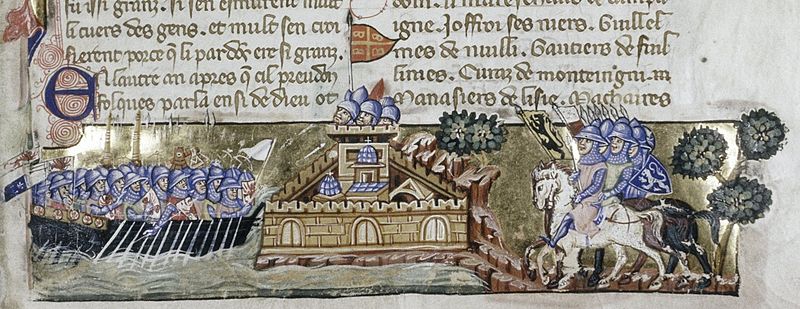
Not at all where they were headed.  Somebody fire their navigator.
["La Conquête de Constantinople," Geoffrey de Villehardouin, 13th century]
[Source: Wikimedia Commons]
As they would have to cross much of the Mediterranean, the leaders of the crusade negotiated with Venice for a fleet of ships to carry them.  Unfortunately, they both over-estimated the total number of crusaders and under-estimated the number that would choose to go through Venice rather than taking an alternate route.  As a result, when they arrived in 1202, they found themselves 21,000 fewer in number than expected and massively in debt to Venice.

The Venetians agreed to remit part of the debt if the crusaders would help them re-conquer the city of Zara.  As a result of this attack, the Pope excommunicated the entire expedition and demanded they continue on to Jerusalem.  This, however, was not to be as they were persuaded by Alexios, son of the recently deposed Byzantine Emperor, to return him to Constantinople.  He told them the Byzantines would welcome him with open arms and he would pay off the crusaders’ debt to the Venetians.  Once again, the expected did not happen, and the expedition ended up besieging and conquering Constantinople in 1203, putting Alexios and his father on the throne, and still not getting paid.
Picture
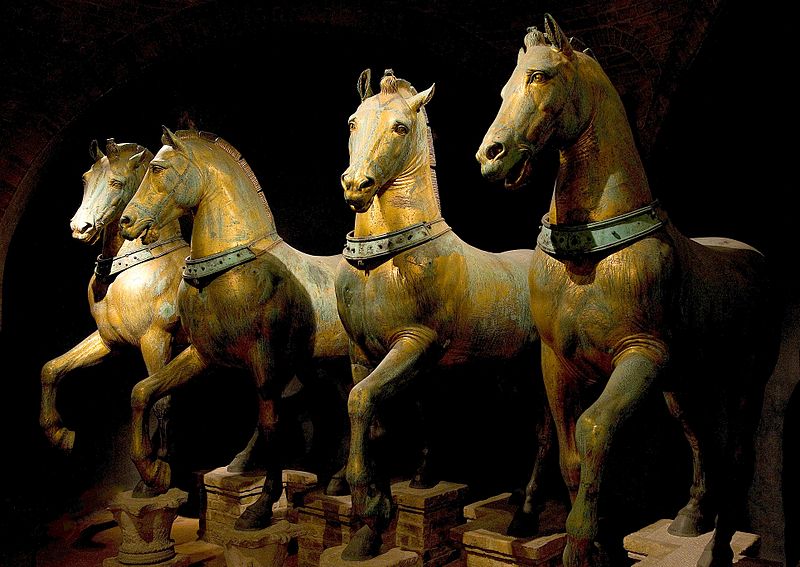
Yeah, they stole a bunch of stuff.
["Horses of Basilica San Marco," possibly 4th century]
[photographed by Morn, Source: Wikimedia Commons]
Eventually the crusaders, French and Venetian alike, starving and probably incredibly frustrated, besieged and conquered the city again, this time for themselves.*  The Latin Empire they set up lasted only 53 years before the Byzantines retook both city and empire.  Instead of conquering Jerusalem, the crusaders ended up sacking two Christian cities, getting excommunicated, and setting up an empire they did not have the resources to run.

* There is significant scholarly debate as to whether this was the Venetians' aim all along.  While I am strongly inclined to think it was not, that is a topic for another time.

Further Reading:
Geoffrey de Villehardouin, "Chronicles of the Fourth Crusade or the Conquest of Constantinople"
Fourth Crusade - Wikipedia

Sources:

Pertusi, Agostino. “Venezia e Bisanzio: 1000-1204.” Dumbarton Oaks Papers 33 (1979):1-22.

Queller, Donald E and Thomas F. Madden. The Fourth Crusade: The Conquest of Constantinople. Philadelphia, PA: University of Pennsylvania Press, 1997.

Wikipedia. "Fourth Crusade." Accessed 7 Nov 2013. http://en.wikipedia.org/wiki/Fourth_Crusade
0 Comments
<<Previous

    My Blog

    Translation of the above: where I post the interesting things I find researching the Classical and Medieval periods in my free time.

    Currently Reading:
    -
    Medieval Monasticism by C. H. Lawrence

    Archives

    March 2016
    February 2016
    January 2016
    December 2015
    November 2015
    October 2015
    September 2015
    August 2015
    July 2015
    June 2015
    May 2015
    April 2015
    March 2015
    February 2015
    January 2015
    December 2014
    November 2014
    October 2014
    September 2014
    August 2014
    July 2014
    June 2014
    May 2014
    April 2014
    March 2014
    February 2014
    January 2014
    December 2013
    November 2013
    October 2013
    September 2013

    Categories

    All
    Architecture
    Biography
    Classical
    Law
    Marriage (legal And Otherwise)
    Medicine
    Medieval
    Misconceptions
    Monasticism
    Overview
    References
    Religion
    Review

    RSS Feed

Powered by Create your own unique website with customizable templates.