Emily Kittell-Queller
  • Home
  • About Me
  • Blog
  • Projects
  • Resume
  • Contact Me

Concubinus - Male Concubines in the Roman Empire

23/12/2013

7 Comments

 
A while back I talked about concubines and the law in Ancient Rome.  If you haven’t read my post on it, go do so.  There are some concepts I explain there that in this post I’m assume people already understand.

What I discussed in my previous post has been assumed by most scholars to apply only to relationships with a male patron and a female concubina.  The masculine form of the term, concubinus, is frequently explained as the term for a young male slave used for sexual release until his master married.  Usually no other possibilities are given.  This is very often exactly what the term refers to.  In Catullus 61, for example, the bridegroom must set aside his concubinus for his bride and to not do so would be to cling to childhood.

This is not the only possible situation described by this term and there are several things worth questioning about such a narrow definition. The fact that the same word with a different gender was used in both cases is also a definite point in favour of this argument, though not a strong one.  There are examples of Latin words that could be made to mean different things simply by changing the ending.  That said, the problem Roman society had with the idea of a man marrying a man was the idea that one many would have to lower himself to act the wife.  In a relationship of concubinage, the lower status partner would not necessarily be considered to be lowering himself further.

Regarding the interpretation of Catullus 61 I’d like to point out that a man was not required to be sexually monogamous.  He could have all the sex he wanted with his slaves, regardless of his status.  Additionally, it was also common for a young man to have a female concubine whom he would dismiss upon his marriage.  Catullus makes no mention of the slave status of the concubinus.  What makes these two relationships any different?

There are many similarities between the usage of concubina and concubinus.  To assume the narrower definition of concubinus is the only accurate one and to assume that it could only be a sexual relationship with no comparison to marriage (as is implicit in the female form of the term) is to force history to conform to our modern views and to ignore the way Roman society worked.


Sources/Further Reading:
Concubinage - Wikipedia
Catullus 61 - Perseus Digital Library (Note: This particular translation uses the word “favourite” for concubinus. This is not how a Roman audience would have understood it.)
John Boswell's Same-Sex Unions in Premodern Europe also provides some discussion of this term in its chapter on Ancient Rome.  Just bear in mind that this is not the primary topic of the book.
7 Comments

Margery Kempe

20/12/2013

0 Comments

 
As with many medieval writers, Margery Kempe’s importance to us comes through what she wrote, in this case the first autobiography in the English language.* It is also one of the only works we have written by and about the life of a middle class woman anywhere in Europe in this time period. 

So what do we know about her life?  She was born in Norfolk, in England around 1373.  She married John Kempe sometime before 1394 and the couple had several children, at least one of whom survived to adulthood.  The pair separated sometime around 1420, though she did return to nurse him when he fell ill a little less than a decade later.

Throughout her life, she developed a strong sense of religious devotion.  There is no evidence as to whether or not she ever learned to read,** though as an adult she had a priest read religious works to her.  She eventually ended up memorizing scripture rather than be dependent on anyone else for access to it.  When the time came to write about her experiences, she dictated them to a priest.  She was also very public about her devotion, carrying out public displays of prayer and penance and making no secret of the fact that she had visions.

For a while she ran both a brewery and a grain mill out of her home, but when these failed she decided to focus her attention on her religion.  She spent much of her time on pilgrimage and visited many of the important religious figures and sites in England at the time.  She traveled widely, both on her own and with her daughter-in-law.  She was arrested multiple times, usually on accusations of heresy (Lollardy, to be specific), but she was released each time and eventually returned home.

Her Book focuses primarily, though not only, on the religious aspect of her life.  It tells us a lot, not only about her as a person, but also about middle class women in England at this time.  She traveled widely.  She ran her own businesses, however short-lived they might have been.  She used her religious experiences to her own benefit and eventually translated these into a written work that survives today.


*Depending on one’s definition of “secular autobiography,” one could also call it one of the few secular autobiographies between Late Antiquity and the Renaissance.  If one defines the term as a work written by a member of the laity, then Margery Kempe’s work definitely counts.  If, however, one defines it as a work that is not in large part about the author’s religious experiences, then it does not count.  The work of Benvenuto Cellini is usually given the honor of being called the first.  To be honest, it seems in some ways a rather arbitrary distinction.  I’m not saying that thinking about it isn’t important, just that it’s arbitrary.

**The Wikipedia article brings this up repeatedly and uses it to show that she was illiterate.  This is not how evidence works.  It is probable that she could neither read nor write.  This is still not how evidence works.

Further Reading:
Margery Kempe - Wikipedia
Book of Margery Kempe - University of Rochester: Middle English Text Series
0 Comments

Journeymen

18/12/2013

0 Comments

 
Picture
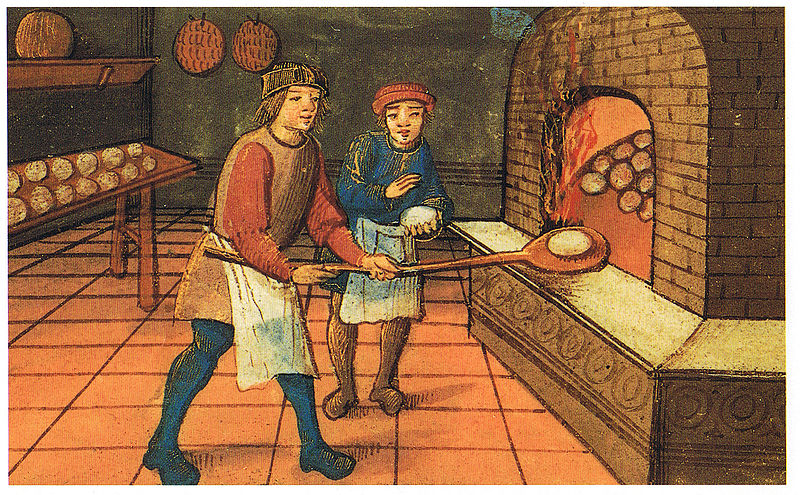
Why a baker? It's not a craft most people think about when they talk about apprentices and journeymen.  That's why.
[A medieval baker, The Bodleian Library, Oxford, Source: Wikimedia Commons]
Journeyman, the stage between apprentice and Master.  If you were part of the urban middle class in high medieval Europe, this was the route you took through life.  It seems a lot like the ideal career path now.  You know, high school, undergraduate, graduate studies, well-paying job.  Guess what?  Just like that ideal career path now, things were actually a lot more complicated and didn’t always work that way.

Yes, the story we all know of the apprentice becoming a journeyman who travels around working for various Masters, eventually completing a masterwork and becoming a Master in the guild is a true one.  People did that.  Both men and women took that path.  These people worked subordinate to the Master in the workshop that employed them.  Some traveled from place to place, some stayed within the same town.  When they had acquired the skill, they created their masterwork and took on the status of Master within the guild and opened their own workshop.

The thing is, not all journeymen became Masters.  It is reasonable to suppose that not all of them wanted to, but beyond that, some simply weren’t good enough.  Additionally, and possibly more importantly, some guilds didn’t want too many Masters glutting the market in any particular area.  Regardless of the reasons in the case of any one individual, the majority of journeymen would retain that status for the majority of their adult lives.

It’s worth noting that the word “journeyman” is related to the French word journée.  These were people who sold their labor by the day.  They were considered unruly and unstable, unfit to hold power within a household.  They could, however, leave the Master they worked for at any time.  They also tended not to marry, the general thinking being that one did not need a spouse until one had a workshop and needed a partner to share in the work.  The position of the journeyman was a marginal one.

Sources/Further Reading:

Rees Jones, Sarah. “The Household and English Urban Government in the Later Middle Ages.” In The Household in Late Medieval Cities: Italy and Northwestern Europe Compared, edited by Myriam Carlier and Tim Soens, 71-87. Louvain-Apeldoorn: Garant, 2001.

Goldberg, P.J.P. “Household and the Organisation of Labour in Late Medieval Towns: some English Evidence.” In The Household in Late Medieval Cities: Italy and Northwestern Europe Compared, edited by Myriam Carlier and Tim Soens, 59-70. Louvain-Apeldoorn: Garant, 2001.

The Wanderers - The Guardian (This isn't actually an article about medieval journeymen, but it's got some interesting information about journeymen now.)
0 Comments

Access Analysis

16/12/2013

2 Comments

 
Picture
Picture
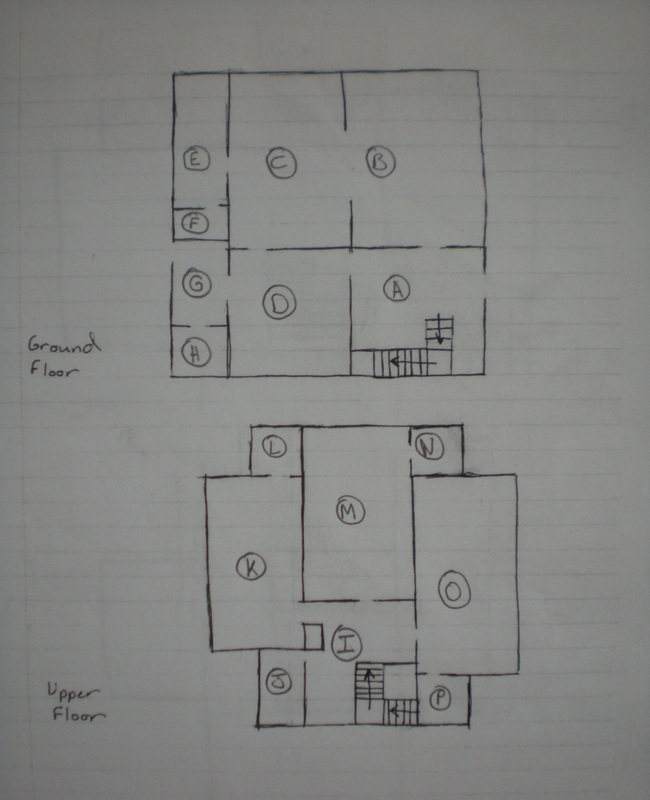
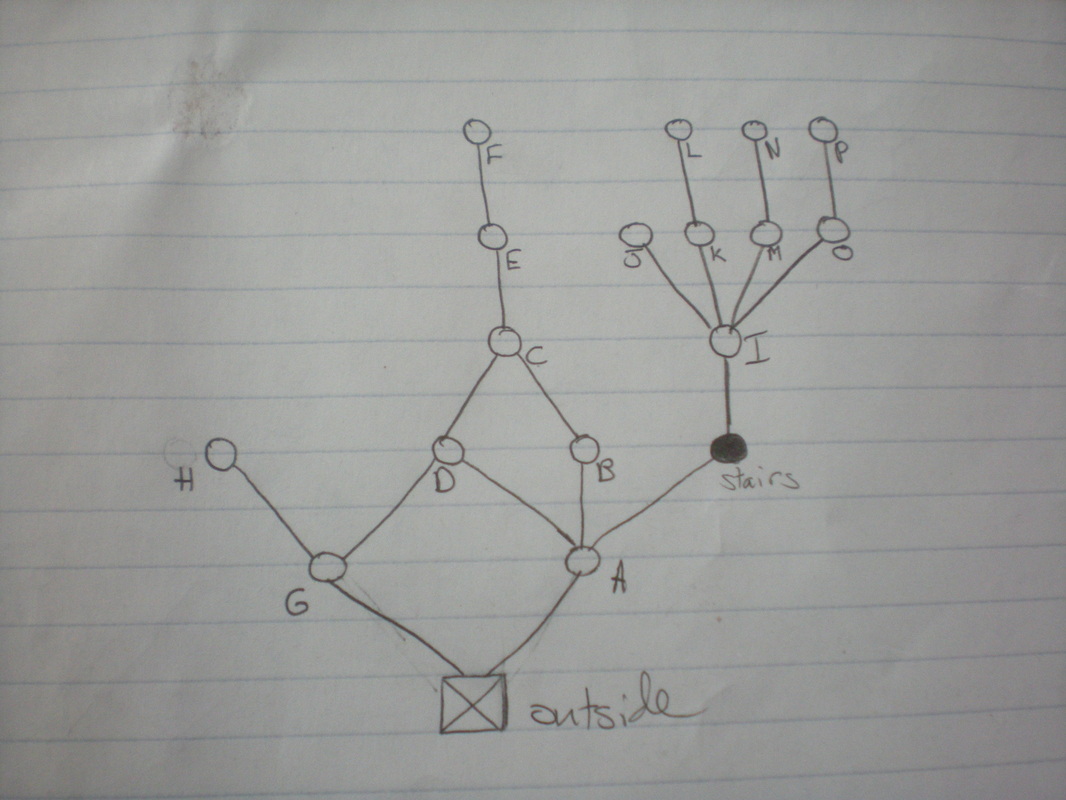
Floor plan and access analysis diagram of a house I lived in for a while.
This is something I learned in a course I took on Ancient and Medieval Domestic Architecture.  It was first developed by architects Bill Hillier and Julienne Hanson in their book The Social Logic of Space, published in 1993.  Used in conjunction with a floor plan, access analysis can give information about how open a building is to people from outside versus people inside.  It is a useful tool, but it’s also just plain fun.  Well I find it fun anyway.

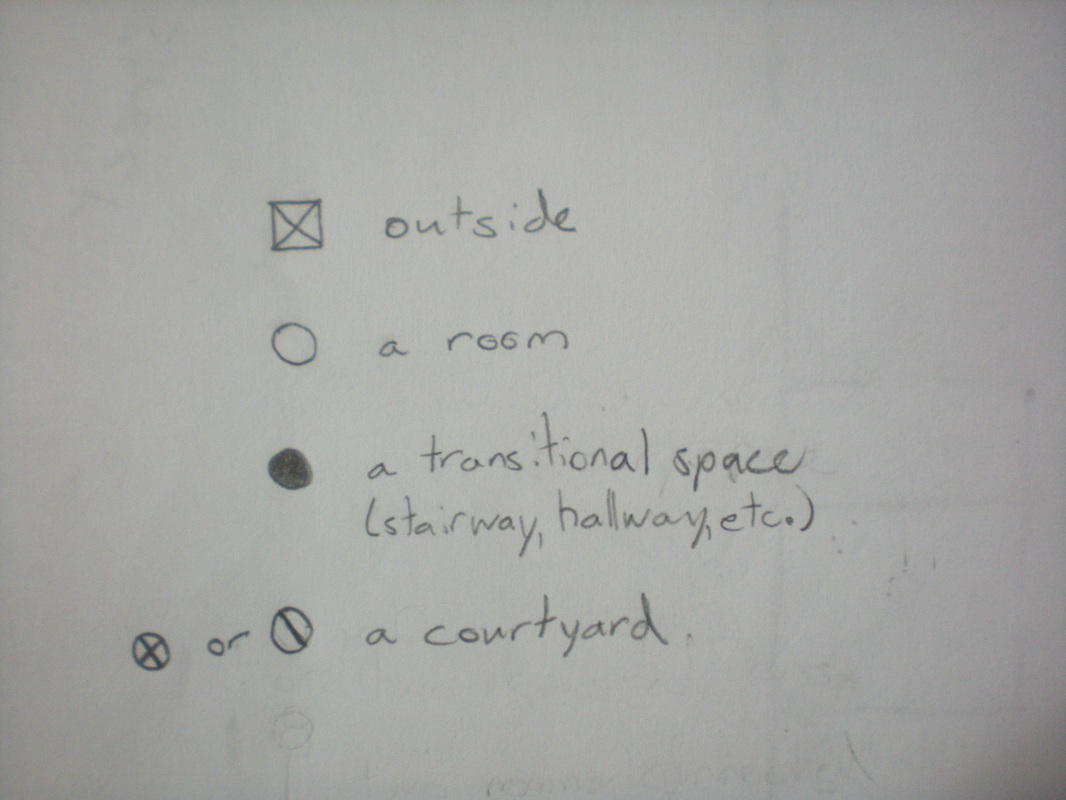
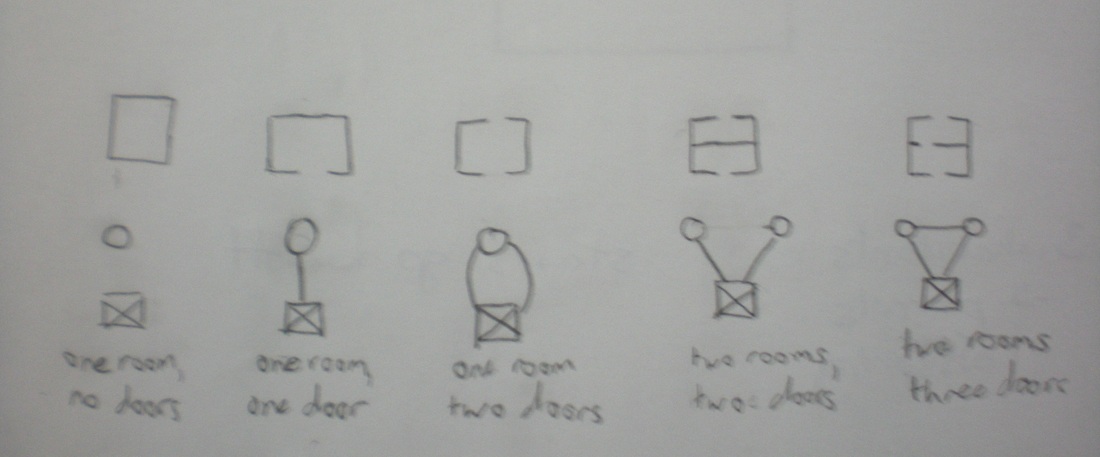
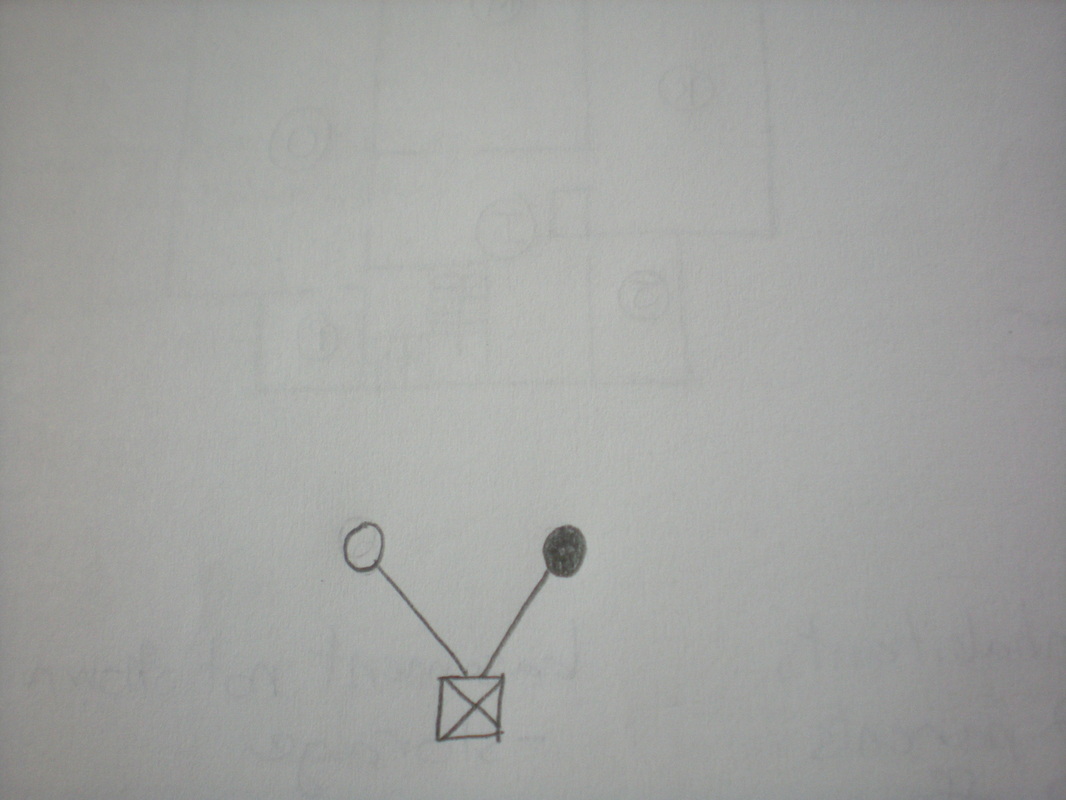
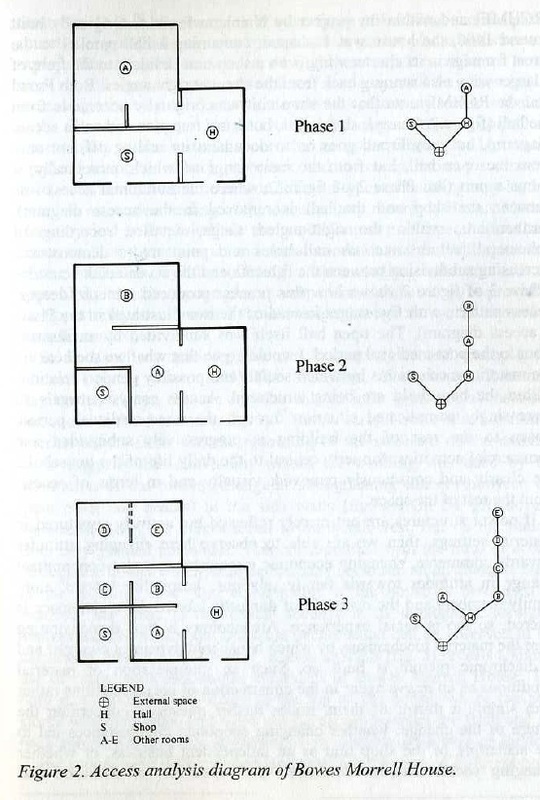
Let’s start with the basics of reading these things.  Any area big enough to be considered its own space gets its own symbol.  A doorway or other way to get between spaces is drawn as a line between symbols  I had a whole explanation here beyond this, but then I realized it would go so much easier if you could just see what I'm talking about.  So have a chart and some simple examples:
Picture
Picture
[Note: When people do access analysis on castles and palaces, gates are counted as separate spaces, not doorways.]
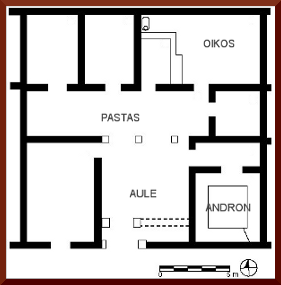
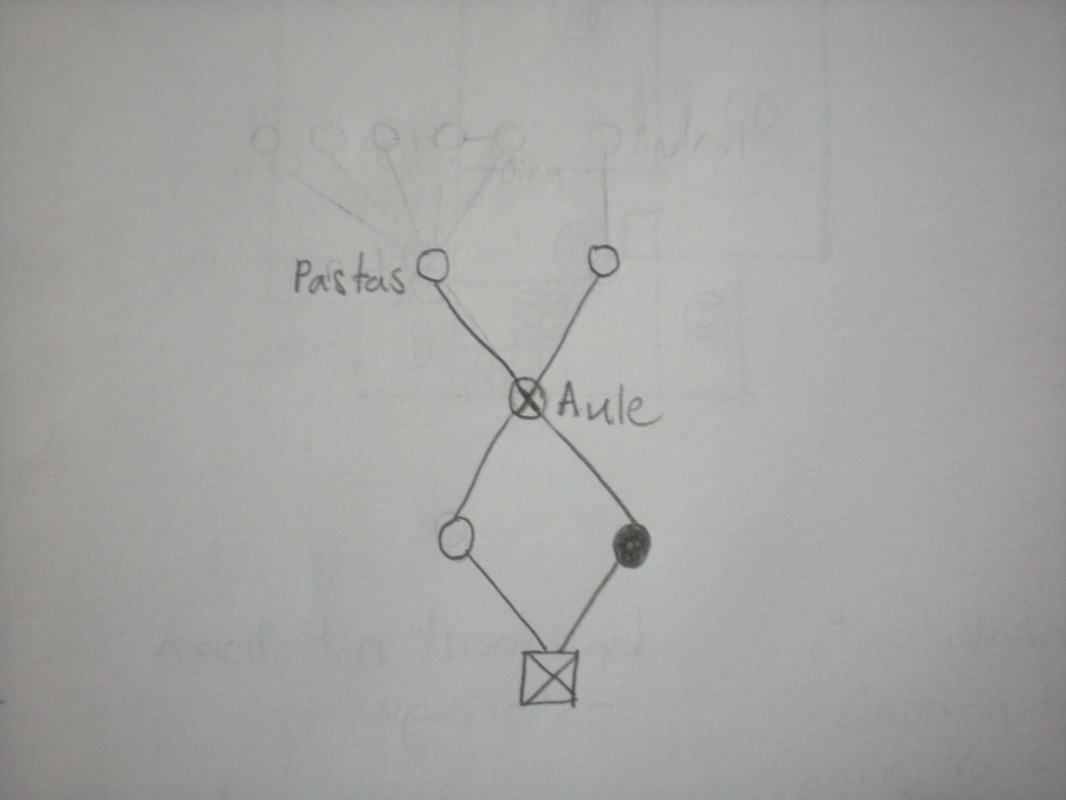
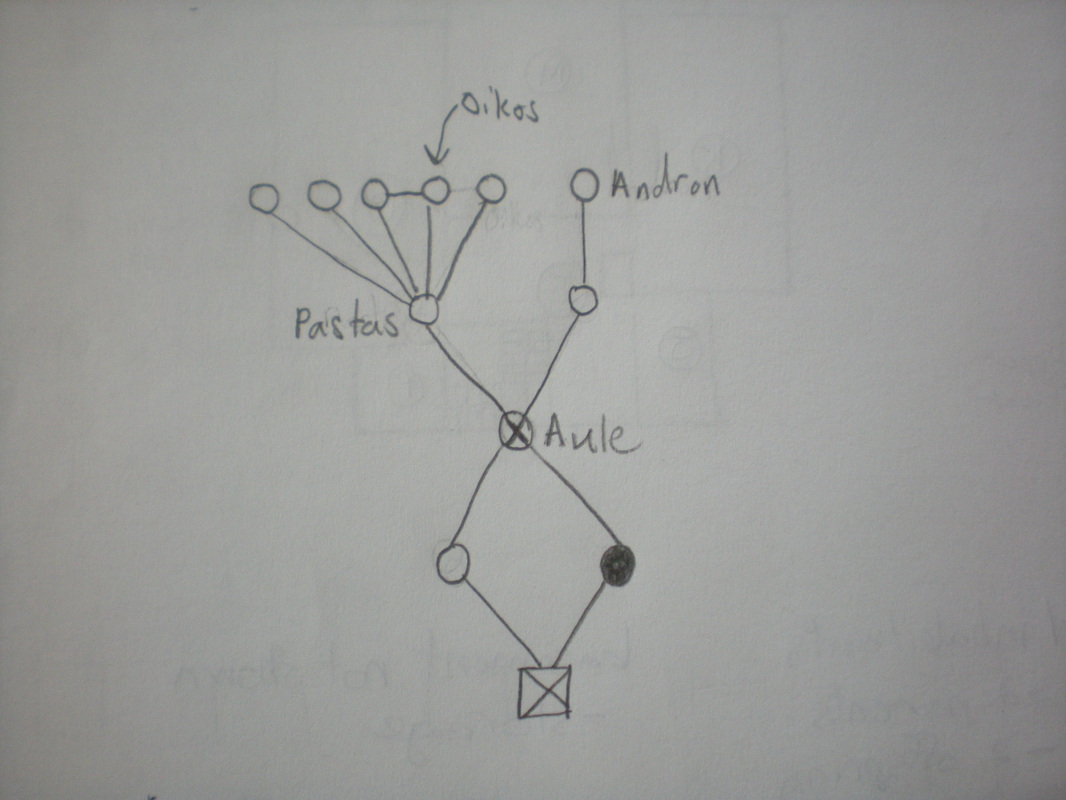
When you draw one of these, always start with the outside.  Mark down any rooms that connect to the outside world. Then move on to any spaces that connect to those.  Remember, what’s important is the distance from the outside, which means that two rooms of on the same level can connect to each other.  Keep going until you’ve marked everything down.  Let’s try this with the house I used to look at gendered space in Ancient Greek houses:
Picture
Picture
Picture
Picture
[Notice how the Andron is one of the deepest rooms in the house despite being physically very close to the front door.]
If there are more than two connections to the outside, be willing to experiment with which one you put in the middle.  Your plan will be easier or harder to draw depending on what you choose.

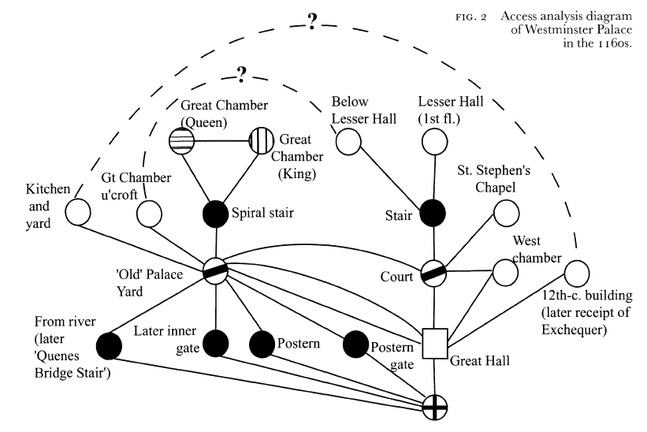
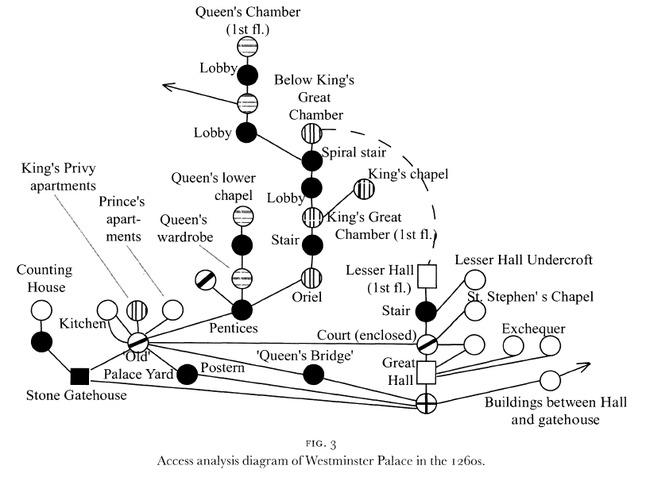
The deeper within a building, the more private the room.  The more “ringy” the plan, the more open the building.  The more “branchy” the plan, the more closed off each individual room is.  The longer and less connected the branches are, the more divided by status the space is likely to be.  Here are some examples of access analysis used in academic work:
Picture
From Jane Grenville's article " Houses and Households in Late Medieval England: An Archaeological Perspective." In Medieval Women: Texts and Contexts in Late Medieval Britain: Essays for Felicity Riddy, edited by Joceyln Wogan-Browne et al.(2000).
Picture
Picture
From Amanda Richardson's article " Gender and Space in English Royal Palaces c. 1160-c. 1547: A Study in Access Analysis and Imagery." In Medieval Archaeology 47 (2003).
2 Comments

Livia Drusilla, Julia Augusta

11/12/2013

0 Comments

 
Picture
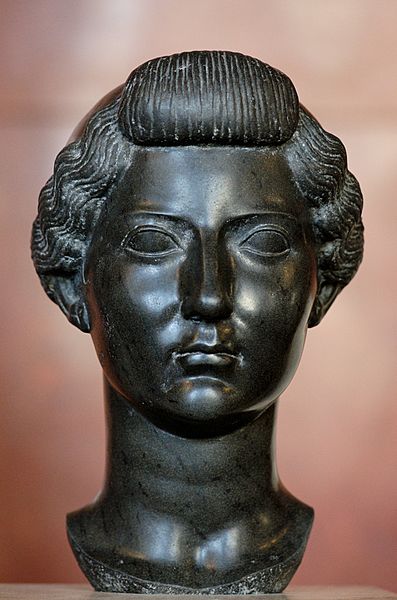
[Livia Drusilla, 31 BCE, Source: Wikimedia Commons]
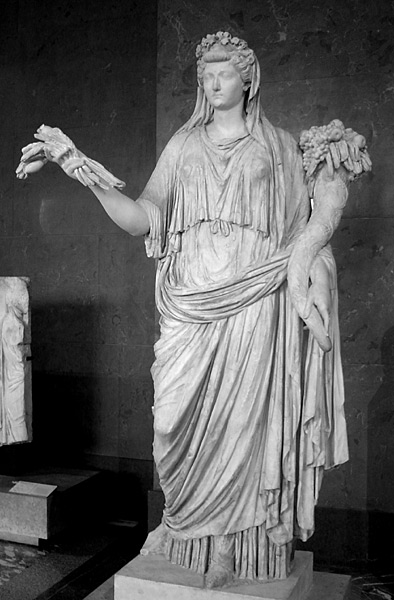
Livia Drusilla (58 or 59 BCE – 29 CE), later also known as Julia Augusta, was a powerful figure in the early Roman Empire.  Wife of one emperor, mother to both one of Rome’s generals and another emperor, and later deified by her grandson, she had an incredible amount of influence, though she held no official power except over her own household.

When she was about sixteen she married Tiberius Claudius Nero.  It is said that on meeting her, Octavian fell instantly in love.  He divorced his wife, Scribonia,* and caused Livia to divorce as well and then married her three days after she gave birth to her second son.  Octavian adopted both of her sons and in 35 BCE, did something unheard of:  he gave her a separate household of her own.  When he died, Octavian left one third of his property to her in his will and stipulated that she be adopted into the Julian family and granted the title of Augusta.  Her political status remained high, so much so that her son Tiberius began to resent her for it.  After she died, he vetoed all honors the Senate voted for her.  It was only when her grandson Claudius became emperor that she was deified and her honors restored.
Picture
Ancestress to a very tangled family tree
[Livia Drusilla dressed as Ops (a fertility goddess), 1st century CE]
[Source: Wikimedia Commons]

Understanding who this woman was is more difficult than one might think, given the plethora (relatively speaking) of sources about her.  Roman historians directly accused her of unseemly ambition, playing favorites to a dangerous degree, and going beyond what was moral to get what she wanted.  Cassius Dio and Tacitus even indirectly accuse her of murder, though oddly enough, the notorious Suetonious** did not do so.  How much of this is true and how much comes out of upper-class Roman men going “Wahhhhh, there’s a woman with power with no husband or father over her!” we’ll never know.


*On the day she gave birth to his only child, no less.
**As a historian he has been called the National Enquirer of the Roman world.  You’d think he would have jumped on an accusation of murder.

Further Reading:
Livia Drusilla - Wikipedia
Villa of Livia - Wikipedia
0 Comments

Medieval Women and Work in the Cities of Northwestern Europe

9/12/2013

0 Comments

 
I mentioned in my post on beguines that they did any and all work open to urban women from the 12th to 14th centuries.  But what kind of work was that?  In the cities of northwestern Europe, the answer to that question is actually “a lot of different things,” at least until opportunities became more restricted in the late 14th century.
Picture
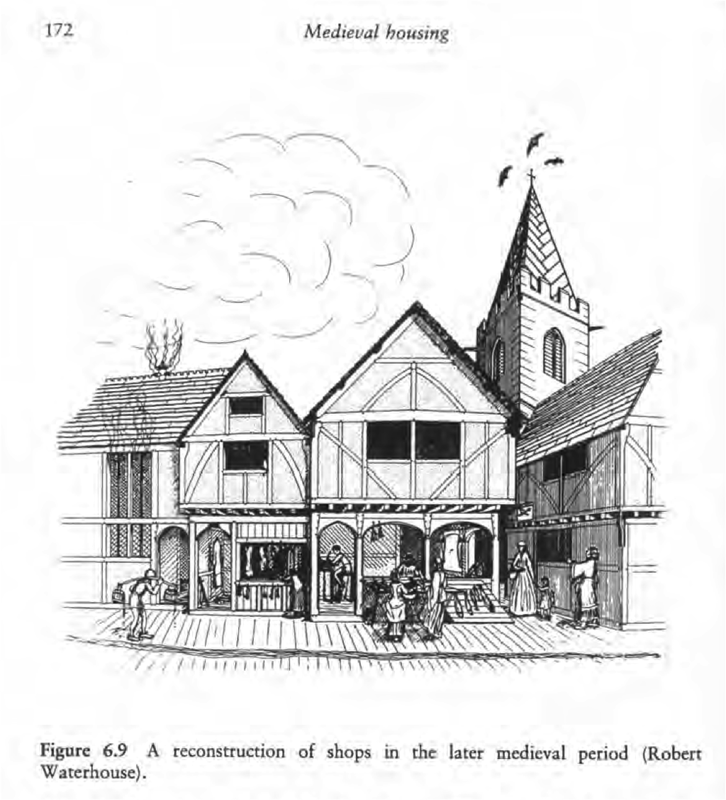
Shops out front, living quarters behind and above.
[Image drawn by Robert Waterhouse, scanned from Jane Grenville's Medieval Housing]
Middle class women, particularly those in the Low Countries, did not usually marry until they were in their mid-20s.  By this point they were considered not only to be able to run a household, but also to contribute to the family income.  I mentioned elsewhere that this particularly applied to women in craft households, which formed the bulk of the middle class at this time.  Many women worked at the same trades as their husbands and fathers.  Others had their own trades, sometimes without the involvement of a spouse.  In particular, married women dominated brewing industry.*  Records also show women working as chandlers, butchers, leatherworkers, bakers, glass grinders, and milliners, to name a few.  Those women not involved in trade were quite frequently teachers in Elementary schools or in one of the few schools for higher education open to girls.
Picture
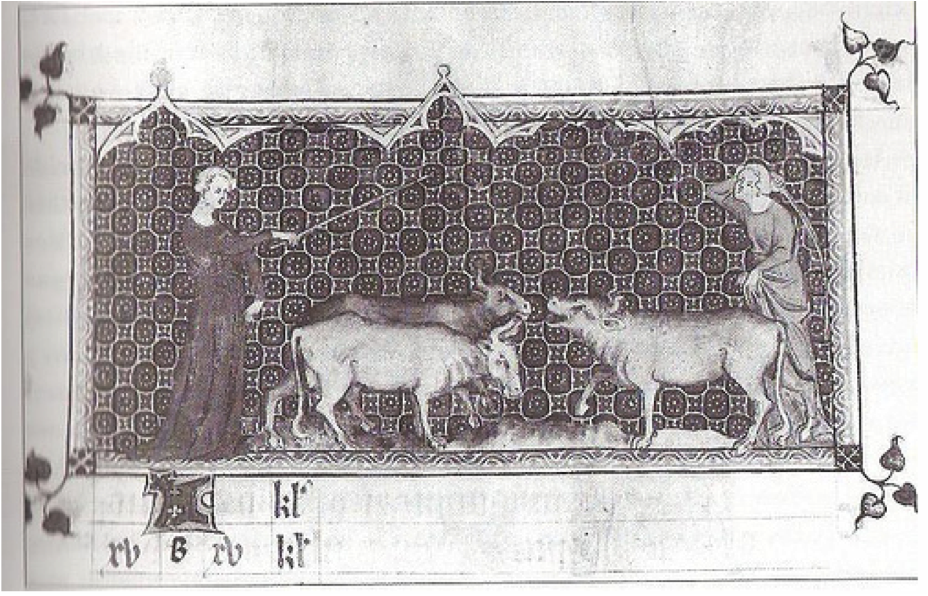
Is that one cow laughing at the other two?  Probably not, but it's fun to imagine.
["Cowherds with their cows," Queen Mary Psalter, c. 1320]
[scanned from David Herlihy's Opera Muliebria]
Women of lower socio-economic status also had some variety in the jobs open to them.  Many women went into domestic service, as did many men.  Some had a certain amount of skill in a particular craft and sold their work by the day to masters in that guild.  Many women held low-paying jobs as hospital workers or within the textile industry.  Still others worked as shop assistants, peddlers, barmaids and tapsters, and even animal herders.
Picture
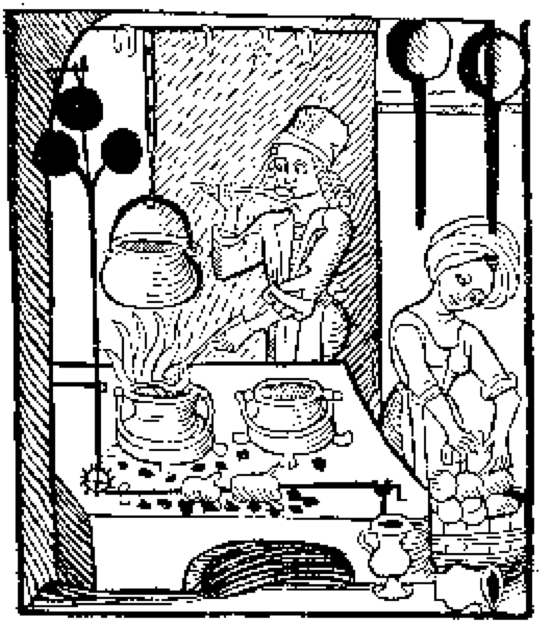
Cooking?  Or Brewing?  I've actually seen this image labeled both ways.
["Kuchenmaistrey," 1505, Johannes Fischauer, Source: Wikimedia Commons]
Finally, I want to point out that some women never did any of this.  Running one’s own household (which, by the way, sometimes included managing both the household finances and the shop finances) was considered work, just as much as working at a craft or for a wage.


*Household inventories from northern Germany in particular show that the equipment necessary for brewing beer was common in houses where the head of household held some other occupation.  This isn’t the only evidence, but if you ask me, it’s some of the most interesting.

Further Reading (or in this case, here, have a book list):

-The Household in Late Medieval Cities: Italy and Northwestern Europe Compared, Edited by Myriam Carlier and Tim Soens, 2001 (Note: About a third to half of this book is written in French.  The rest is in English.)

-Medieval Households, David Herlihy, 1985

-Opera Muliebria: Women and Work in Medieval Europe, David Herlihy, 2001

-Medieval Housing,
Jane Grenville, 1997

-Gendering the Master Narrative: Women and Power in the Middle Ages, Edited by Mary C. Erler and Maryanne Kowaleski, 2003
0 Comments

Pompeian Graffiti

6/12/2013

3 Comments

 
NOTE: This post is about Roman graffiti.  As such, it contains a little bit of NSFW language.  Consider yourself warned.
Picture
Oh the weight of words on the wall.
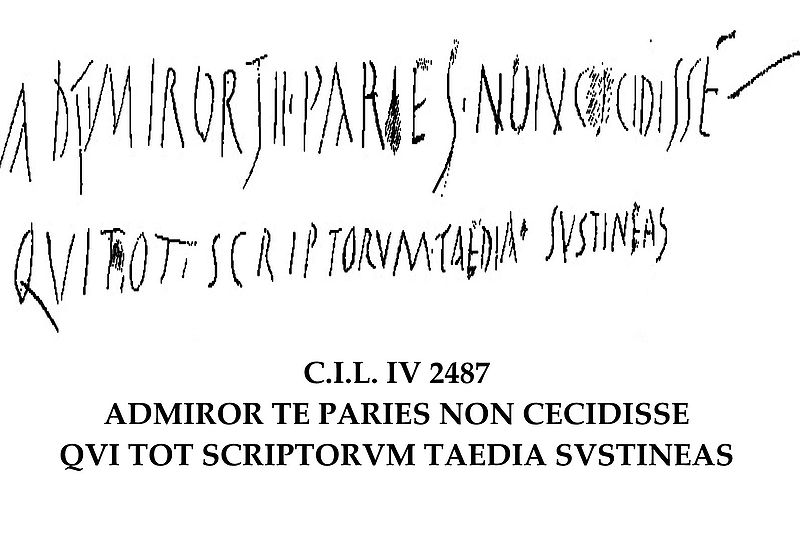
[Drawing and transcription of graffiti found on the wall of the basilica of Pompeii]
[ Source: Wikimedia Commons]

“I wonder, O wall, that you have not yet fallen, so much tedious writing do you hold.”  The walls of Pompeii functioned in some ways like a community bulletin board.  The thing is, most of what people have heard about (if they’ve heard about it at all) is the sexual graffiti and sometimes the political propaganda.  To be fair, there’s a lot of it.  On the wall of a brothel: “Weep you girls.  My penis has given you up.  Now it penetrates men’s behinds.  Goodbye, wondrous femininity.”  Several different people wrote on the wall of the Lupanare that they had good sex there.
Picture
Vote for my candidate!  He's honorable and stuff.
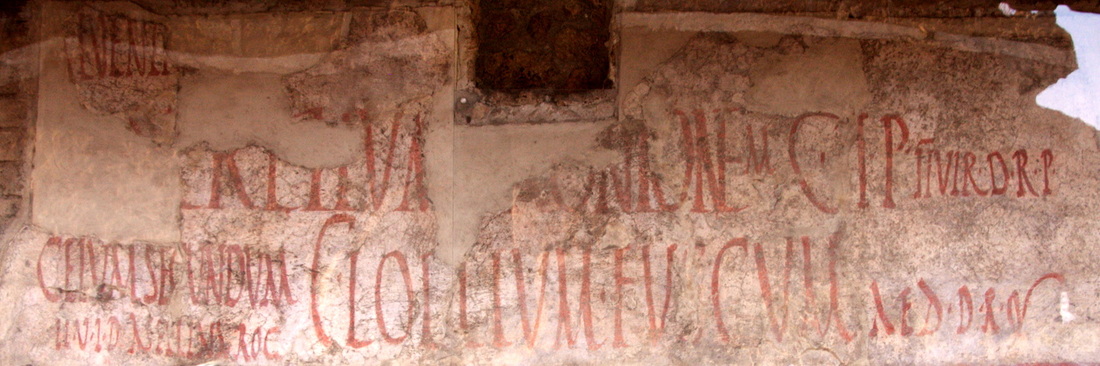
[Political graffiti on the wall of a cook shop]
[C.I.L. IV 07870 - C.I.L. IV 07874, Source: Wikimedia Commons]

Then there’s the political stuff.  Most of it is pretty straightforward.  “All the worshipers of Isis call for Cn. Helvius Sabinus as aedile.”  Though only free men of a certain status could vote, anyone and everyone could and did write on the walls.  Then there are the more negative ones.  “All the deadbeats and Macerius ask for Vatia as aedile.”  And then there’s this one: “I ask that you make Gaius Julius Polybius aedile.  He bakes good bread.”  Hey, it's no stupider than some other propaganda I've seen.
Picture
It's a fish!
[Graffito in the passageway to the large theater, Source: Wikimedia Commons]
Those weren’t the only sorts of things people wrote.  The House of the Moralist is so named because somebody wrote a bunch of moral sayings on the walls.  Some people felt it necessary to tell others how well they had defecated on a particular spot. This apparently happened so frequently that someone wrote: “Defecator, may everything turn out well so that you can leave this place.”  If one wanted to insult one’s host or an enemy, a public wall was the place to do it.  Several people simply left good wishes for others.  Business advertised prices directly on the wall.  And then there’s this one: “On April 19th, I made bread.”

Lastly: “Aufidius was here.” Some things never change.

To read more graffiti from Pompeii and Herculaneum:
Graffiti from Pompeii - Pompeiana.org
Pompeii: Graffiti, Signs & Electoral Notices - Ancient History Encyclopedia
Voices of the People: Graffiti from the Walls of Pompeii - Cengage Learning
Epigraphik Datenbank (Type Pompei in the "Place" search box and click "Go".  This will give you the inscriptions in Latin.)
Category: Ancient Graffiti in Pompeii - Wikimedia Commons

Discussions of Pompeian Graffiti:
Reading the Writing on Pompeii's Walls - Smithsonian.com
What can we learn from Roman Graffiti - The Telegraph
Political Graffiti from Pompeii - Heathwood Hall Episcopal School
3 Comments

The Plan of St. Gall

4/12/2013

1 Comment

 
Picture
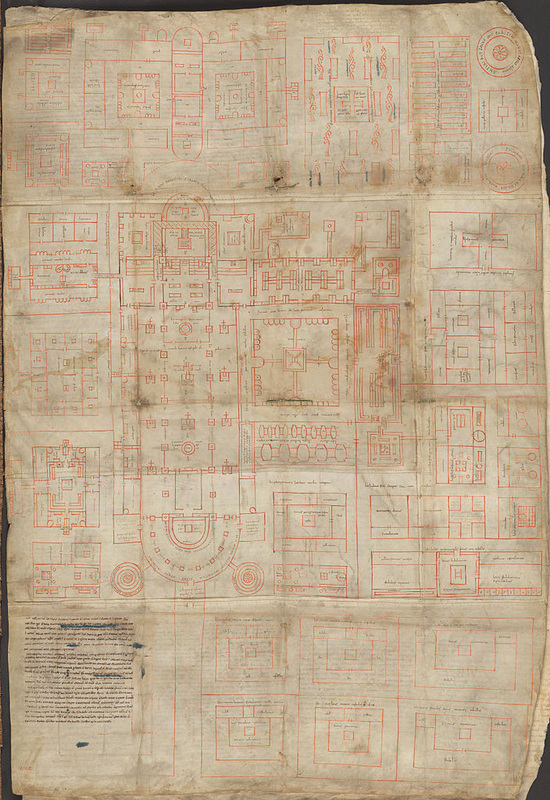
It may not look it, but this thing is startlingly large.
["Codex Sangallensis," 9th century, Source: Wikimedia Commons]
Picture
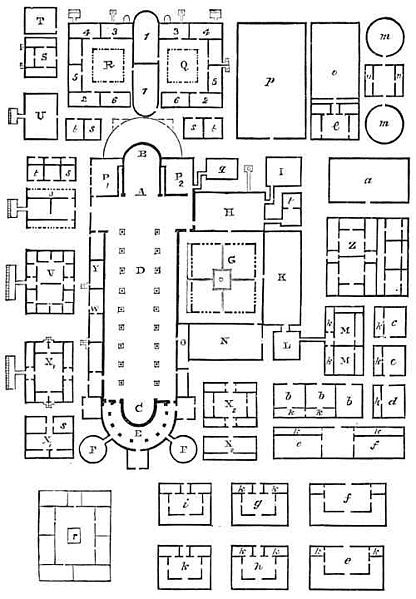
Here's a more easily readable version.
[19th century drawing of the Plan of St. Gall, Source: Wikimedia Commons]
The Plan of St. Gall is the only surviving major architectural drawing from the period 600-1300 CE.  It is not so named not because it was drawn at the Abbey of St. Gall (in what is now Switzerland).  Nor does it depict that particular abbey.  It was produced in Reichenau and sent to the Abbot of St. Gall at the time, Abbot Gozbert.  What he wanted it for, we do not know, but someone in the 12th century decided it was no longer useful and had it folded into book form, to be used for the Life of St. Martin.  It is entirely possible that this is the reason it survives.

While the Plan shows what one could call the “average” Benedictine monastery layout, it doesn’t actually correspond to anything that has actually been built.  Scholars are still debating the original purpose behind its production, along with most other things about it, but there are things that can be learned from it.  At the absolute minimum, it provides an excellent example and teaching tool for learning the layout of a Benedictine monastery.

Though the scale is not necessarily* consistent, the Plan shows all of the buildings that a decently sized monastery would need in order to be relatively self-sufficient, from an infirmary to pens for livestock to guest quarters.  Most architectural drawings only show the church and the buildings immediately surrounding the cloister, which means that people don’t generally think about what else a monastery would need.

Though I call this the “average” plan, it’s worth keeping in mind that this wasn’t always the model, particularly in the time when this was drawn.  It was around this time period that Charlemagne decided that monks and nuns in his lands should live by the Rule of St. Benedict and no other.  This particular type of plan became attached to that and it spread from there.

*This is one of those things they’re still debating.  It comes with the territory.  Yay.

Further Reading:
Plan of Saint Gall - Wikipedia
St. Gall Project - UCLA Center for Medieval and Renaissance Studies
The Plan of St Gall - stgallplan.org
St Gall Plan - Miami University
1 Comment

"Barbarian Invasions"

2/12/2013

0 Comments

 
Picture
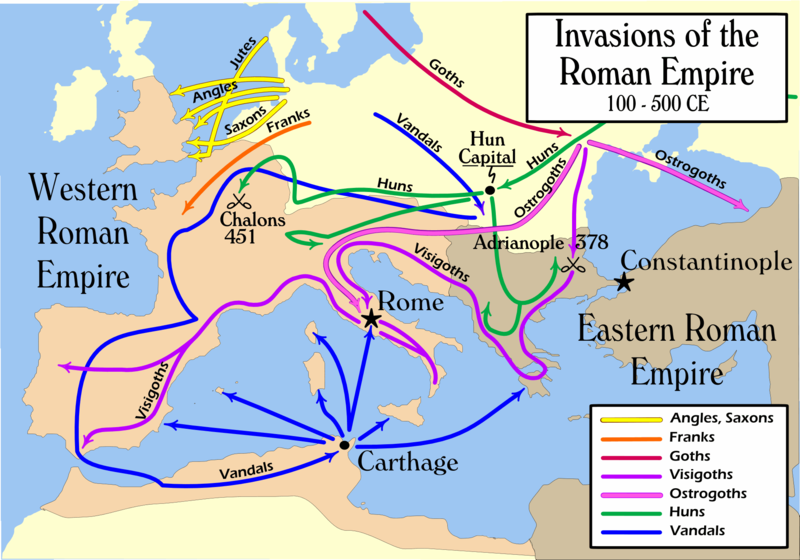
Though Wikipedia uses better terminology, its maps apparently don't.  On the plus side, the number of languages you can find this map in is pretty cool.
["Invasions of the Roman Empire 1," created by MapMaster]
[Source: Wikimedia Commons]

The time period we call Late Antiquity saw the beginning of significant movement by Germanic tribes into the territories claimed by the Roman Empire.  Many of us were taught in school that these were the “barbarian invasions” that caused the fall of Rome.  As with so many other things I learned at that age, that’s not only wrong, it’s problematic.  It sets up the educated and cultured Romans against the fur-wearing warrior barbarians.  It also completely ignores the fact that these events happened over a long period of time, were not premeditated (in a “let’s go take over those people’s land” way), and were not always violent.  I’m not going to argue what caused the end of the western Roman Empire, but to claim this as the cause is ridiculous.

As I mentioned in this post, the Roman Empire had really gotten too big to handle by the 3rd century.  Though Diocletian and the others managed to deal with the problem, they did not solve it.  The Empire was still losing control of its outlying territories.  They didn’t have the soldiers to keep them, and in some cases there simply wasn’t a stable population in these areas to maintain them as Roman.  Some of these new groups of people found places to settle down within such territories with the blessing of the Empire.  The Roman army also started employing some of them as soldiers to maintain control of certain parts of the Empire, sometimes using them against other tribes moving into the same area.

This was a time of change for Rome, with all the complications major changes bring.  The distinctions between citizen and non-citizen were blurring.  Soldiers were often more loyal to their commanders than to the Empire.  “Barbarian” culture was mixing with Roman culture, changing both ideals and way of life for people throughout the Empire.

Further Reading:
Migration Period - Wikipedia
0 Comments

    My Blog

    Translation of the above: where I post the interesting things I find researching the Classical and Medieval periods in my free time.

    Currently Reading:
    -
    Medieval Monasticism by C. H. Lawrence

    Archives

    March 2016
    February 2016
    January 2016
    December 2015
    November 2015
    October 2015
    September 2015
    August 2015
    July 2015
    June 2015
    May 2015
    April 2015
    March 2015
    February 2015
    January 2015
    December 2014
    November 2014
    October 2014
    September 2014
    August 2014
    July 2014
    June 2014
    May 2014
    April 2014
    March 2014
    February 2014
    January 2014
    December 2013
    November 2013
    October 2013
    September 2013

    Categories

    All
    Architecture
    Biography
    Classical
    Law
    Marriage (legal And Otherwise)
    Medicine
    Medieval
    Misconceptions
    Monasticism
    Overview
    References
    Religion
    Review

    RSS Feed

Powered by Create your own unique website with customizable templates.